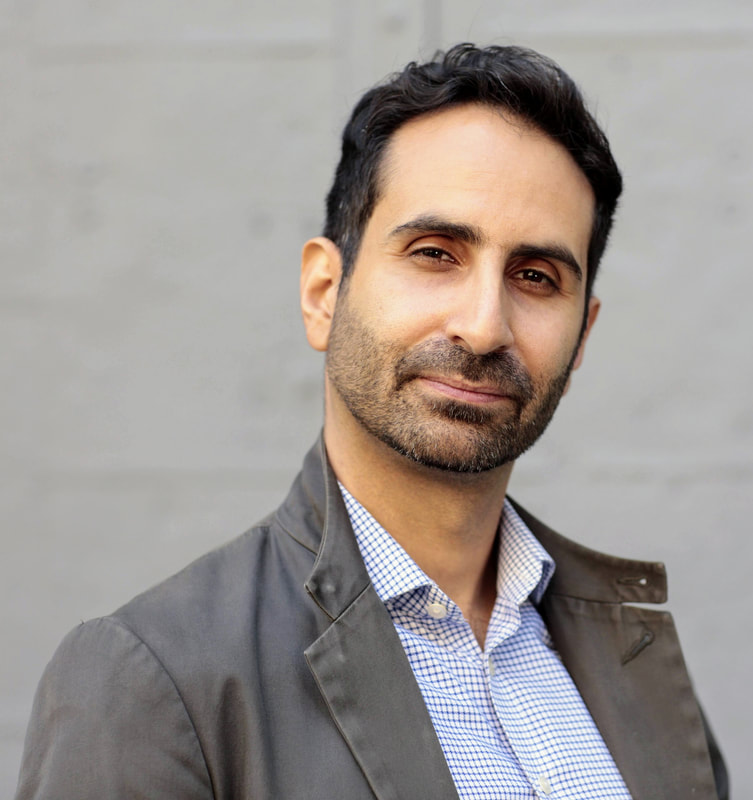

Asia Blooming sat down with Fahad Siadat, a Los Angeles-based composer, performer, conductor, and artistic director of the The Resonance Collective and the new music group HEX. His creative interests lie at the intersection of creative and religious practices, which he engages with through collaborating on multimedia performance works, organizing educational programs, and performing actively.
Fahad shared that while he grew up in a Muslim family, his parents did not adhere strictly to specific dogmatic beliefs, instead favoring a more open approach to spiritual ideas. His hometown in southern Oregon also embraced a non-religious form of spirituality that drew heavily from Eastern traditions and philosophies, which was conducive to his interest in spiritual and existential questions growing up. While he did engage with traditional practices of Islam like celebrating Ramadan and visiting Mecca, he sought a more consistent, disciplined spiritual practice for personal and spiritual discovery. Through making music, he found an avenue not just for accessing transcendence, but also putting spiritual ideas into practice. He shared that, often, artists are drawn to their craft because they experience something emotional, magical, and transcendental through creating art and they want to devote their time to bringing that into being and sharing it with others. It is the desire to serve as a “vehicle for transcendence” that separates the artist from those who seek art as a way to access transcendent experiences. Fahad referenced “the journey through ten thousand veils” in Sufi philosophy, which is a metaphor for removing the layers that lie between our perception and a greater truth, and he sees artistic expression as a means to pull aside some of these veils.
The connection between art and spirituality was made early on for Fahad, having noticed that we treat art the same way we treat the sacred. We hush our voices when we enter a concert hall, and we gaze reverently at displays at a museum. Yet, the line between art and not-art is ever-shifting and subjective–isn’t art whatever we decide is art? In the same vein, there’s a passage in the Bible that reads, “When persons seek the Lord… they always find him.” It’s less about some material essence that makes something art, but rather the intentionality and framing that separates art from the mundane.
This interest in exploring the spiritual dimension of art led Fahad to serve as the artistic director of The Resonance Collective, an organization that seeks to expand our understanding of the arts as a sacred and mystical experience. The three core pillars of the organization–creation, curation, and education–nurture a community of like-minded artists and offer original works. The first pillar is the development of original, interdisciplinary works that explore stories based on spiritual transformation. The Resonance Collective’s most recent work, The Conference of the Birds, composed by Fahad Siadat with a libretto by Sholeh Wolpé and directed/choreographed by André Megerdichian, recounts a 12th century Sufi story of a flock of birds seeking a divine creature, a not-so-subtle allegory for the “soul’s search for truth.” Fahad shared that works like these not only invite the audience into deeper levels of spiritual understanding, but they also serve as rituals that facilitate growth and transformation in the performers themselves as they embody the theater pieces. Through the long process of rehearsing and performing The Conference of the Birds across Southern California, the performers reported that the more they performed the work, the more deeply they understood the journey of the birds, and the more the story moved them. It is this active, transformational process occurring on stage in real-time and in the performers that allows the audience to experience a similarly transcendent experience by proxy. Looking forward, Fahad and André Megerdichian, director of original works at The Resonance Collective, are collaborating on a new work commissioned by Third Angle New Music, a nonprofit in Portland whose mission is to curate and create contemporary sonic works. Unlike The Resonance Collective’s previous, narrative-based works, this new, multimedia work is meant to create an environment that induces transcendental experiences. As part of the development of this new work, Fahad and André are researching practices used by various cultures to engender ecstatic states. This work will premiere in Portland and Los Angeles next spring.
Despite the growing movement that recognizes art as a means for accessing transcendental states of mind, Fahad noted that the contemporary Western art scene, especially in music, is still resistant to fully exploring the spiritual dimension of art. The second pillar of The Resonance Collective is a concert series that features artists who are philosophically aligned with the organization. For many of these artists, it is liberating to be in a space that embraces the transcendental. For the collective, working with a diverse community of artists allows the organization to showcase a wide variety of genres and performance types, all of which offer ways of “unselfing” and accessing the sacred. These art forms range from experimental Korean instrumental music to meditative chimes to 5Rhythms ecstatic dance. One of the performances last year featured the Philippine Madrigal Singers, which had a wide-ranging program that included music from the Lion King, traditional Filipino songs, and Catholic madrigal music. In preparatory discussions, the singers and Fahad framed the program with the concept of “kapwa,” which is the idea that “there is a shared self” that situates the individual inextricably in community. Despite the seemingly disparate forms featured in the performance series, they all involve artists who resonate with the organization’s mission and create works that offer a portal into deeper spiritual understanding.
The third and final pillar of the organization is their education component, most prominently through the annual NEO Voice Festival. Led by David Harris, ensemble director, and Laurel Irene, vocal director, it’s an intensive event for vocalists and composers that explores how artists tell sacred stories through vocal music, and it fuses voice science and spatial acoustics with a utopian reimagining of music-making in community. Fahad saw several features of the conservatory model that constricts the exploration of musicians, including the lack of agency and focus on inherited traditions and Euro-centrism, and the festival addresses these shortcomings by embracing the diversity of techniques and vocal systems from different genres and cultures. Fahad has noticed that younger composers are increasingly incorporating aesthetics from music they listen to into their compositions, which he sees as an exciting development.
Fahad’s perspective is a refreshing one, invoking the rigor and clarity of academia without the elitism and over-abstraction. It’s borne out of both a personal spiritual practice and formal research. By making the ascendant accessible to both artists and audiences through the Resonance Collective, he serves as a steadfast shepherd in a society increasingly forced to examine its most fundamental worldviews.
