

Warning: This article contains spoilers.
There are countless questions viewers may have at the end of a hitman or assassin-centric movie. Do assassins retire when they get older? Do they remember the families of those they’ve killed or do they feel guilty? Do the families of the deceased remember? In Min Kyu-dong’s The Old Woman with the Knife, viewers can find the answers to these questions, along with a fascinating story about a legendary assassin in the latter years of her life.
The story begins in the 1970s, when a young teen girl is found freezing to death in the evening snow by a humble husband and wife. The couple opens up their home to the young girl in exchange for her washing dishes at their family restaurant. This mutually benefits both parties as the wife is pregnant at the time and can no longer work. Even after the wife gives birth, the young teen continues to stay with the family, getting comfortable with the couple and this way of life. One day, the girl is assaulted by a U.S. military officer, and in self defense, she kills him. While she is panicking over the thought that she’ll be kicked out, the husband simply acknowledges that she killed “a bug that was dirtying the world.” This incident leads the husband to introduce the young girl to the “pest control” underground organization he works for. Essentially, it’s a group of vigilante assassins who eliminate criminals.
Now that the young girl has joined the organization, the husband, called Ryu, gives her the alias, Nails. Together they clean up the streets of criminals who have yet to face consequences for their crimes. This continues on seamlessly for years, until one day, Ryu’s family is targeted. A crime syndicate murders his wife and son, and in an emotional rampage, Ryu confronts them alone, killing about half of their men before he himself is murdered. Nails comes to his rescue just moments too late, but like Ryu, she emotionally seeks revenge, successfuly killing the remaining men. This experience leads to Nails taking on a new name—Hornclaw—and a much colder stance: no attachments or connections means no weaknesses.
Fast-forward about 40 years, and Hornclaw is still part of the organization, even in her sixties. She’s still killing criminals and going through life alone, though she doesn’t seem to have any qualms about it. Up until this point, the film has primarily remained in the past, giving audiences a clear backstory on Hornclaw and how she becomes a legendary assassin. From this point forward, the story moves in the present, with flashbacks to the past instead. Hornclaw then meets a new face in the organization, Bullfight, and the two instantly are at odds. Bullfight seems to want to pick a fight with Hornclaw, and Hornclaw does not trust him based on how suddenly he joins the organization. Their rocky start continues to spiral downwards, and soon, it becomes clear they must have some sort of history.

After an incident where Hornclaw is injured while eliminating an old colleague for breaking an organization rule to leave no witnesses, she also ends up leaving a witness in Dr. Kang, a veterinarian who takes her into his clinic to help clean her wounds. This angers Bullfight even more, and instead of targeting her, he now focuses on Dr. Kang and his family. The pair’s unexplained rivalry comes to a head when Bullfight must rescue Hornclaw from an operation, only to be poisoned by her and left to die. This ignites his fury, and he kidnaps Dr. Kang’s daughter to provoke her, leading to a dramatic final battle that only one of them would survive.
The first attention-grabbing feat of this film is its ability to jump between past and present so smoothly. Past memories are portrayed in literal flashes, with shots showing Hornclaw doing something in the present, and then flashing back and forth to shots of her doing the same thing in the past. These shots frame her in the same spot as well, allowing for smooth transitions. One of the most visually outstanding moments in the film is Hornclaw in the present running up the stairs to save Dr. Kang and his family from danger while simultaneously showing Hornclaw running up the stairs to save Ryu in the past. The tension of the moment only releases once audiences see that, though Ryu could not be saved, Dr. Kang is. For Marvel fans, this scene is reminiscent of Spider-man saving MJ in Spider-Man: No Way Home.
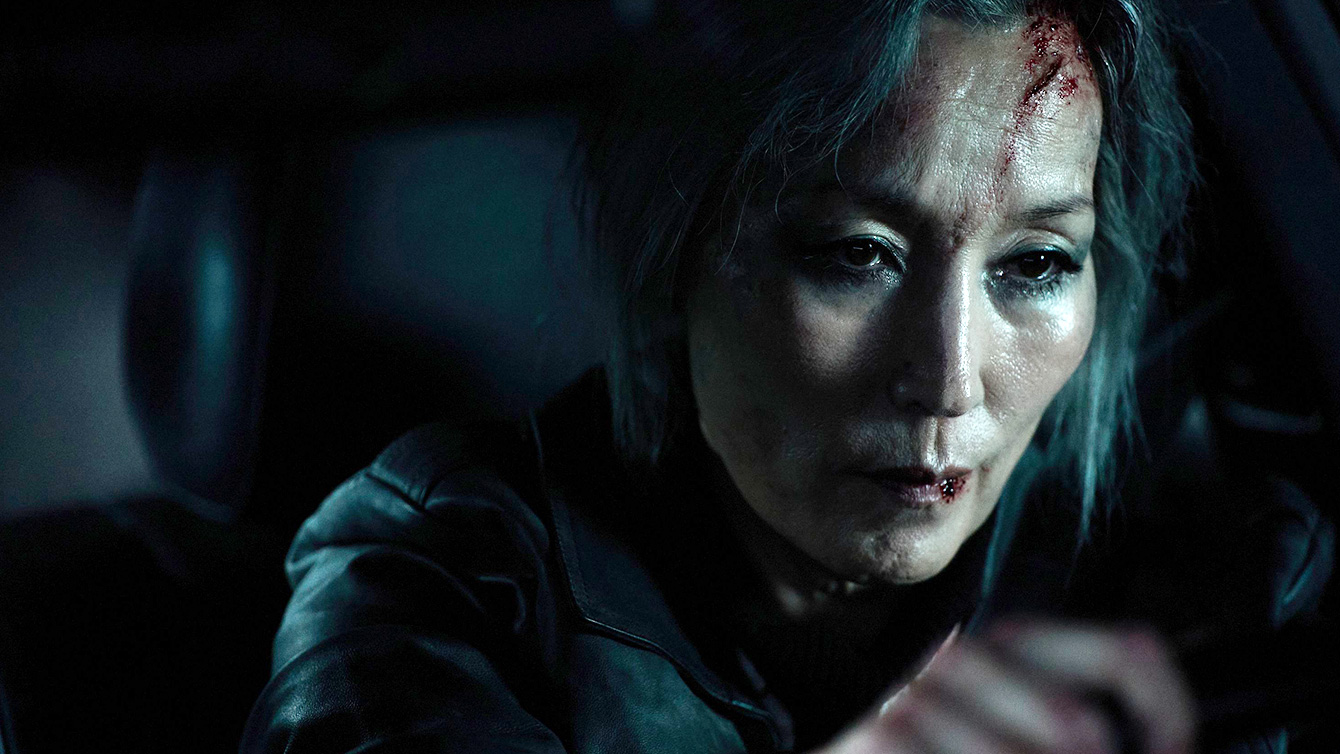
Another praiseworthy note is for the actors. Not only is the delivery of dialogue natural and smooth, but the emotional portrayal of each character resonates. Though Hornclaw wasn’t necessarily a good person either, Lee Hye-young’s portrayal of her, particularly through subtle glances and shifts in gaze, made her empathetic at times and relentlessly cold-hearted in other moments. Viewers would root for her in one scene, but hate her in another. Similarly, Kim Sung-cheol’s shift from murderous psychopath to innocent child who felt betrayed by someone he loved and trusted was unforgettable—in fact, it happened so quickly that you may have to rewind and watch again if you missed it the first time. The two in particular also had great chemistry. During their fight scenes, they seemed like they truly hated each other. But, in their final moments, it felt as if you were watching someone being reunited with their family for the first time in years.
The storyline itself was also quite unique, though credit should be given to Gu Byeong-mo as the author of the original novel. It was fascinating to see an older female assassin in her sixties still carrying out her decades-long mission to rid the world of pests. Not only that, but we also get glimpses into what life is like for someone whose family was killed by an assassin, and whether an assassin remembers each kill. Like how doctors must prevent themselves from getting attached to each patient for their sanity’s sake, it’s the same for Hornclaw. She must remain detached, oftentimes forgetting the circumstances and the family members of the assassinated. This all ties together to provide a unique perspective on the job and its consequences.
Though action scenes were plentiful, they did not take away from the plot or a cohesive story either. The Old Woman with the Knife was ultimately a well-developed, well-thought out film with an interesting story, enough action scenes to rival a Mission Impossible film, and yet enough emotional vulnerability and growth in the characters to find them relatable and likable. Though it may not carry the deepest meaning, it’s simply a film that was enjoyable to watch.
