

Combining dance, weaving, fashion, and music, the Filipino American Association of Portland and Vicinity, Inc (FAAPVI) presented a cultural performance at the Patricia Reser Arts Center in October. Patrons of all ages decked out in glamorous outfits buzzed around the lobby, admiring the handiwork of master weavers on one side and wedding dresses created by esteemed Filipino designers on the other. While there was a solid turnout, the venue was not entirely full, likely a function of the steep ticket prices (starting at $84). There was a reason for the higher-than-average prices–75% of the ticket proceeds will go to making critical repairs of the Filipino American community center, which was built in 1941 and is the only Filipino-focused space in all of Oregon. A video on the screen showcased the variety of programming hosted in the multi-purpose building, and it showed community members bonding with each other and learning new skills in workshops that taught dancing, music, filmmaking, cooking, martial arts, and much more.
After two singers present the national anthems of The Philippines and the US, an announcer explains the story behind the main act of the night, Philippine Ballet Theater. The troupe’s two-part performance is based on a legend about a prince, Rajah Indarapatra, who carves a bird, the legendary Sarimanok, out of wood, a metaphor for his quest for love, and how he meets and falls in love with the moon goddess, who later infuses the Sarimanok with divine energy. The combination of ballet technique with vibrant outfits and traditional dance forms from Mindanao (a South Philippine island) made for a beautiful and mesmerizing performance. Emerging from the darkness is the prince, clad in a light blue silk vest and shorts with gold embroidery, a headband, and a necklace with a large round ornament. Many of the outfits, including the prince’s, originate from a Muslim royalty dance practiced in Mindanao by the Maranao people called singkil. While the other men share the same clothing style as the prince, the female dancers often wear a fitted top, loose pants or skirts, a small golden headdress, and a sablay, which is a colorful sash work across one shoulder.
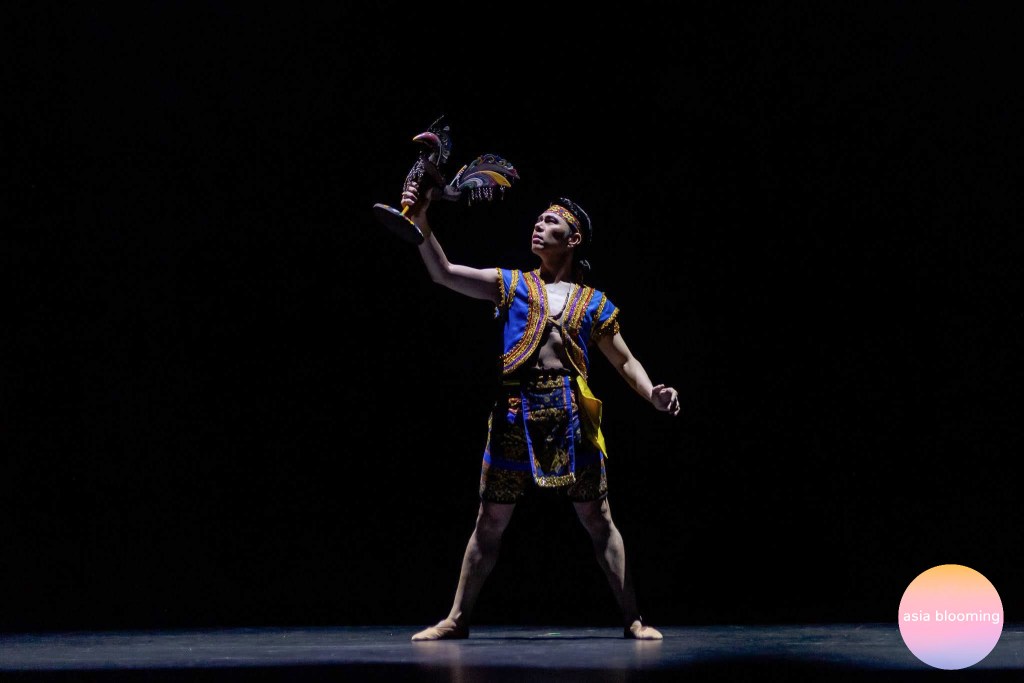
The prince is shown carving the rooster-shaped Sarimanok and offering his devotion to the symbol of prosperity. The Sarimanok is the most recognizable symbol of the Maranao people and appears in many rituals. The prince’s movements are strong and confident, the effortlessly executed leaps and turns situating him as a hero in the unfolding story. The royal folk dances that follow involve various combinations of the 22-member dance troupe. There’s the segment where four women present a dance called kapmalo-malong, which involves elegantly shaping and moving with a tube-shaped piece of fabric (malong). Sometimes they hold it around their waists like a skirt; other times they hold it like a sash diagonally around their body, demonstrating the versatility of this type of garment. Other traditional applications of the malong include being used as blankets, head coverings, fishnets, and even a stretcher!

There is another royal court dance called kapagapir that involves a group of dancers dressed in vibrant outfits, carrying sparkly golden fans and taking measured steps across the stage to create beautiful shapes. This segues into an especially captivating segment where male dancers place long bamboo poles on the ground and clip them rhythmically as the fan-bearers deftly step in and out of the poles. A metaphor for navigating danger with grace, the dance references a legend where forest nymphs played a prank on a princess by having the wind blow so strongly that the branches and rocks swirled around her, but the princess was unfazed, easily tip-toeing around the obstacles. Upping the ante, additional dancers come with more bamboo poles, this time laying them perpendicular to the poles already on the ground. A new couple clad in gold also appear on stage, elegantly navigating the criss-crossed bamboo poles while holding fans or a sword.

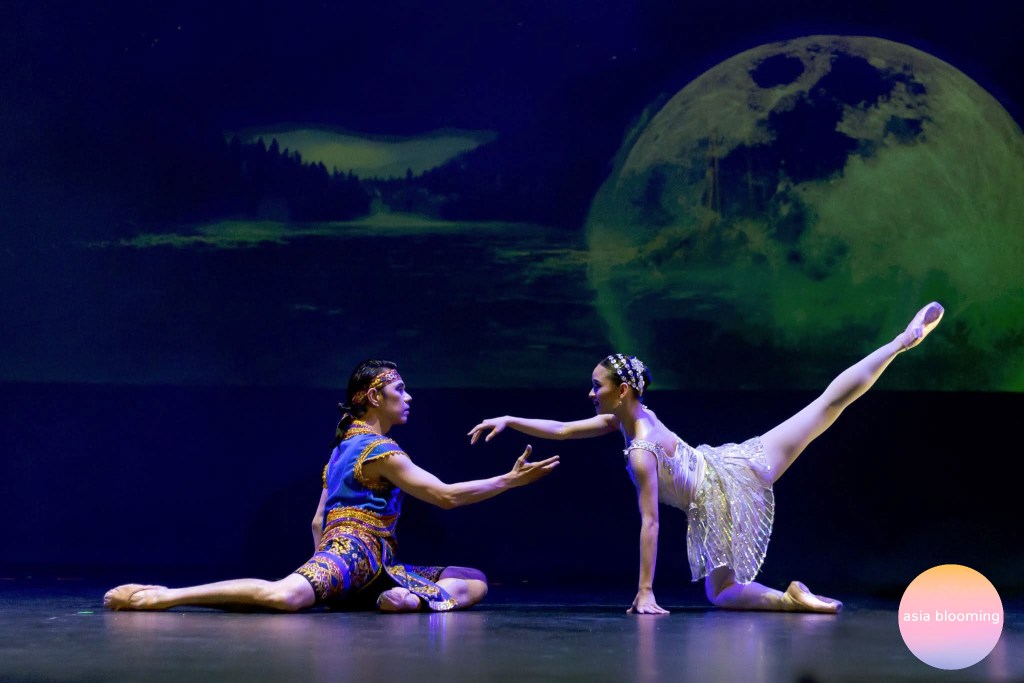
The vibrant court segment closes and makes way for another solo by the prince with the Sarimanok, which transports him closer and closer to the moon. He comes across a group of shimmery fairies tumbling and swirling in the evening and, at long last, ushering in the brilliant moon goddess upon their shoulders. She floated down, as if from the sky, adorned in a sparkly, white-sheer dress and a long veil. During her brief solo, the prince cannot help but be enamored by her beauty and grace, and he joins her in a tender duet. They grow fond of each other, but after a dreamy time together, the goddess disappears and leaves the prince in despair. And thus closes the first part of the performance.
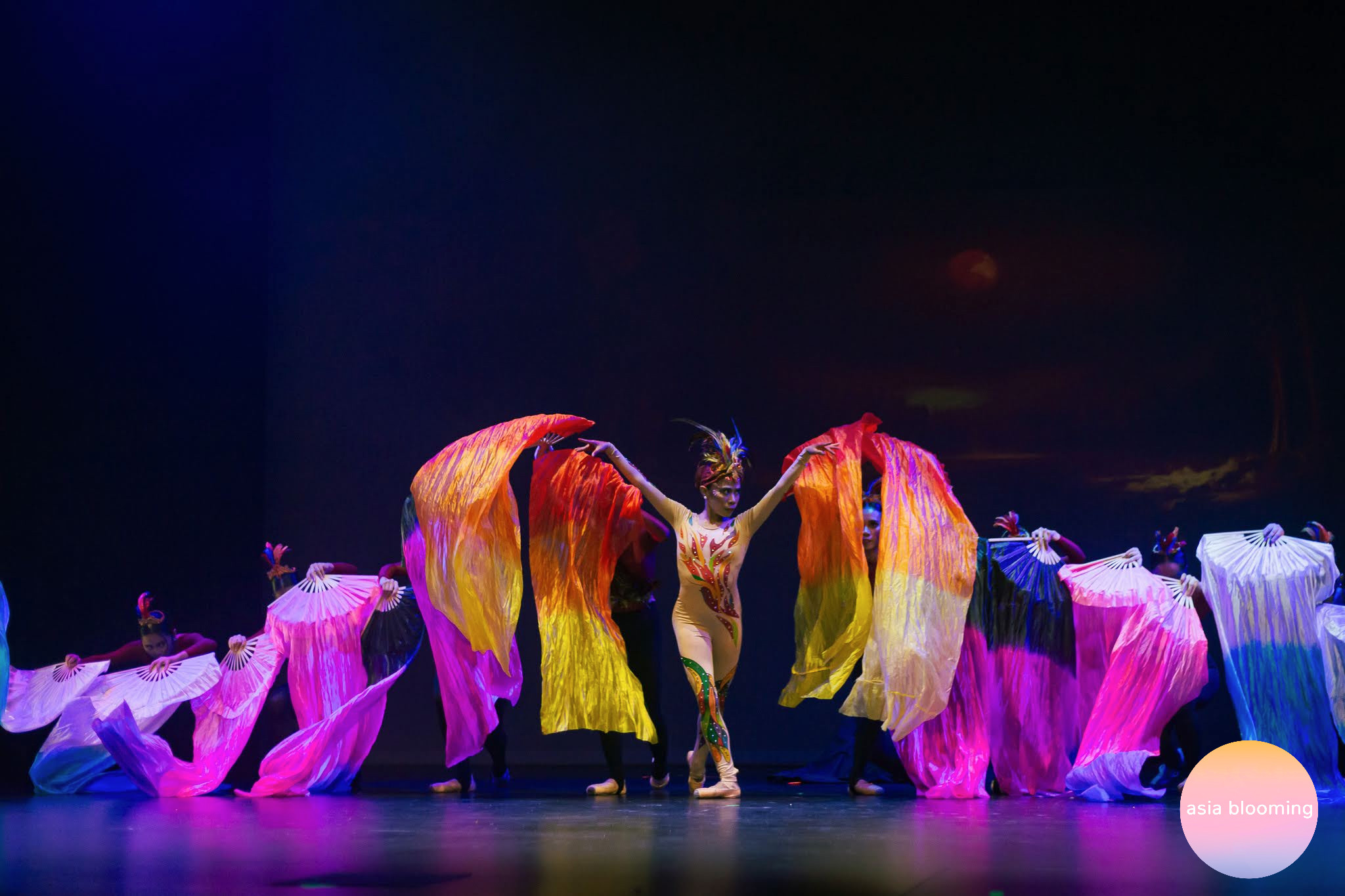
In the second act, we are reintroduced to the Sarimanok, this time in human form. Her body is decorated with bursts of color, and her head sports an ochre fabric headdress adorned with multicolored feathers. Bold, fierce, and mysterious, she summons a posse of supporting dancers flaunting rainbow silk fans in a visually stunning routine. A carving brought to life by the moon goddess’ divine powers, the Sarimanok embodies both the strength of the prince and the otherworldly quality of a god.

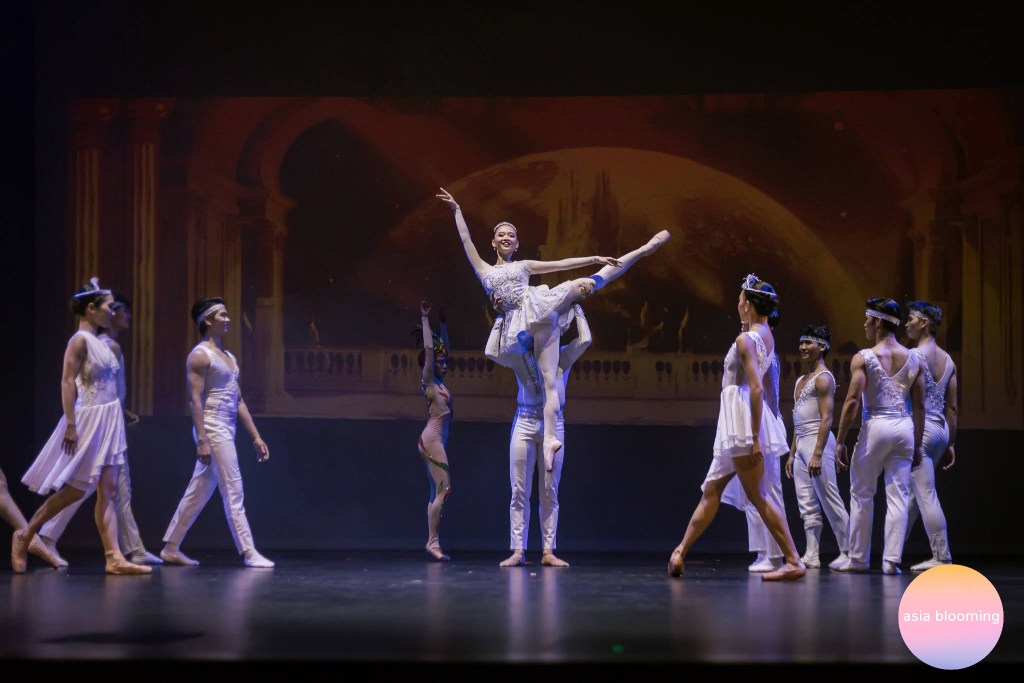
The prince, noticing a disturbance in the forest, orders his men to search the land. They wield bamboo sticks as weapons and display their prowess in a physically taxing ensemble routine that involves barrel jumps, kicks en pointe, and martial arts-like stances. The Sarimanok weaves in and out of their formation and leans on their bamboo sticks to strike a pose, taunting them to catch her. In a climactic moment, she climbs on top of one of the men and uses sticks held high to balance in the sky. The prince has a duet with the Sarimanok where she brings him to the palace where the moon god resides. Just before the prince enters the realm of the divine, he bestows his crown to his best friend. In a grand reunion between the prince and the moon goddess, they have a sweet duet, and the whole entourage–including the Sarimanok–comes out to support the couple. It’s a triumphant ending to an eventful story, and the performers earn a resounding standing ovation for their excellent work. The performance is a brilliant display of athleticism, artistry, and folklore, and the vibrant costumes and dramatic soundtrack make it that much more spectacular.
Most productions would have ended the show here, but not this one. Following the dance performance, Raul Sunico performs a short classical piano set. Sunico is a passionate educator, performer, and composer who currently serves as Chairman of the Doctoral Studies Program of St. Paul College of Music, and his setlist includes Filipino love songs and classical repertoire. Channeling the feeling of undying love, Sunico performs “Buhat”, a classic Tagalog love song from a Filipino film Tunay Na Ina (Real Mother), and “Hanggang Sa Dulo Ng Waloang Hanggan”, originally composed by leading Filipino composer George Canseco, with a crystal clear sound and technical prowess. Sunico’s interpretation of the “Overture” from My Fair Lady holds a slight sense of urgency, and while it was still enjoyable, the performance could benefit from more space for tension and release.
Overall, it was a delightful evening celebrating Filipino arts and culture, especially in a region that’s not exactly known for its diversity. I do hope that more of these events become more financially accessible to folks of all walks of life.
Click on the photo below to view our photos from the performance:

