

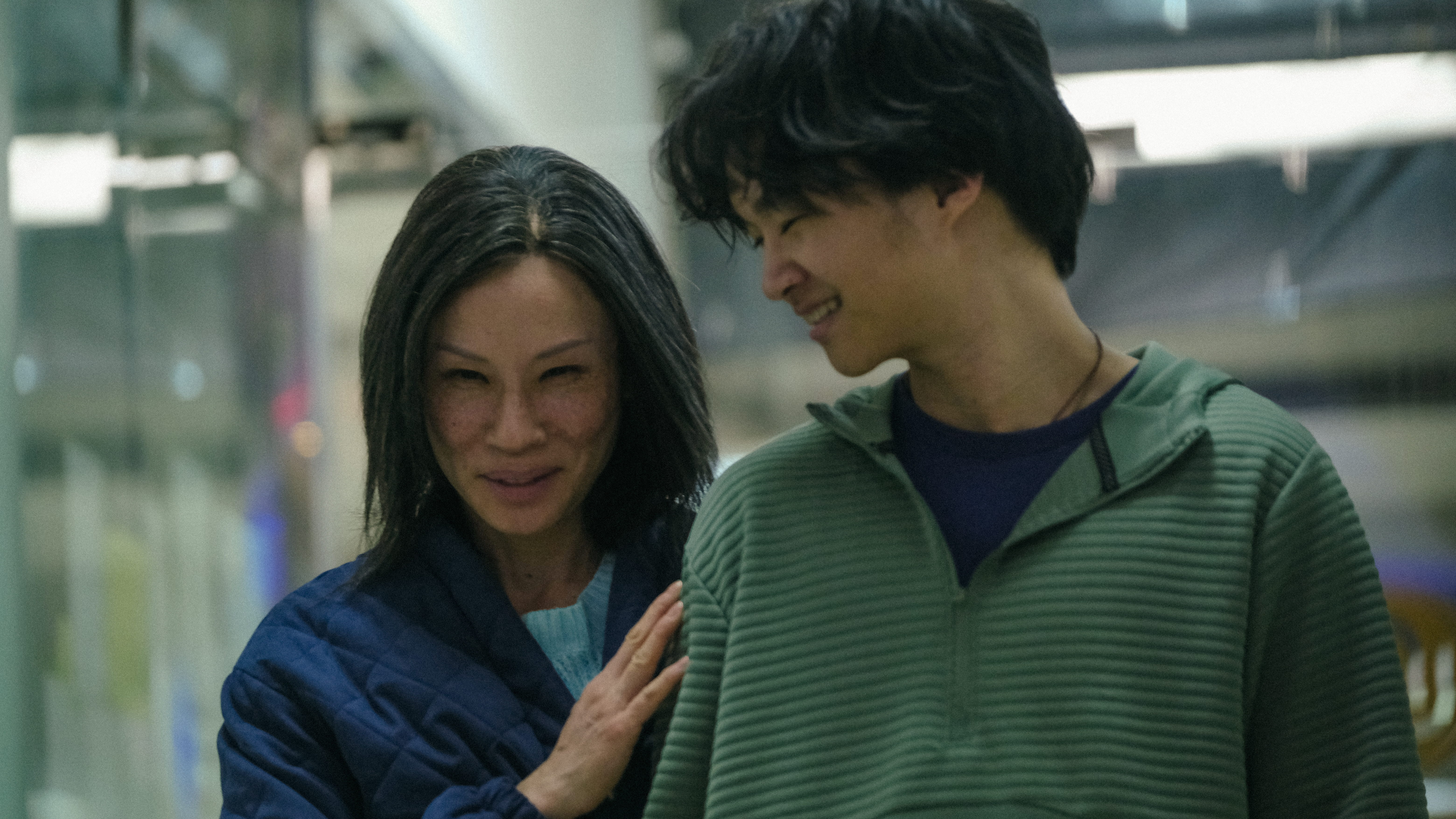
Mental health and illness has always been challenging topics in many cultures and communities. In the Asian community, in particular, people are often taught to hide their struggles and negative emotions to “save face” on the outside. As a result, this can sometimes prevent people from seeking and receiving the help they truly need. In the film Rosemead, this unfortunately becomes the case for Irene and her son Joe.
Three years prior, Irene’s husband passed away due to his cancer. Following her husband’s death, their son Joe was diagnosed with schizophrenia. Simultaneously, her own cancer has returned as well. Faced with difficulty after difficulty, Irene tries to shoulder it all. She keeps her cancer and clinical trial secret from her son, worried he has too much to handle already, and she secretly takes him to a clinic to receive medication and counseling to manage his schizophrenia. As Joe’s condition worsens and he grows an unsettling interest in mass shootings and school shootings, her cancer continues to spread. Stuck wondering what will happen to Joe if she passes away due to her cancer, Irene makes a life-altering decision that she believes is in their best interests.
Ahead of its theatrical release, Asia Blooming spoke with producer and actress Lucy Liu (who plays Irene), actor Lawrence Shou (who plays Joe), and director Eric Lin about the film.
While there were seasoned professionals such as screenwriter Marilyn Fu and producer and actress Lucy Liu on the project, Rosemead was also a first for some. For Lawrence Shou, it was his first feature film, and for Eric Lin, it was his directorial debut. “I built a career as a cinematographer, and I had worked with Mynette Louie, one of the producers, many, many times. She’s the one who brought me the LA Times article by Frank Shyong that they optioned and Marilyn Fu’s script that was adapted from that article,” Lin began. “I’d seen firsthand how difficult it was to direct and to make a film, but when I read the script and the article, it completely broke my heart. I saw my own family within that story. I grew up in Thousand Oaks, and we would go to Rosemead or the San Gabriel Valley every weekend to go shopping and go to restaurants. I just felt how tactile that world was—I could see it, I could smell it, and I could understand the psychology and emotionality behind the characters and their decisions. It felt like it was a story I could tell truthfully and honestly, so I decided to take the leap of faith to direct it. The producers also took a leap of faith with me as director.”
Similarly, Liu was initially drawn to the project because of its story as well. “Because this was based on a true story, it was really devastating to read it. But at the same time, I felt like it was an important story to tell so that we could spark conversation about why it happened and why it doesn’t have to happen.” Working both behind and in front of the camera, Liu balanced both her roles as producer and actress to help create a cohesive story. “I tried to get ahead of it and get as much of the producing part done in the beginning as I could. It was an ongoing process, but being able to get a lot of that heavy lifting started before we even started shooting was helpful. We had a very short schedule in order to get everything done, and it was just important to start from the very beginning and be a part of that process [to tell this story earnestly].”
With how daunting the film’s topic could be for a new director, Lin shared that the project was made with honesty and connection in mind. “The article gave us a lot of factual goal posts that we understood. These certain events happened, and the challenge in adapting it was always how to connect those dots emotionally. How did Irene get to this place where she felt like she had to do this thing? How we would keep it grounded emotionally was the most important thing to me, especially with something like Joe’s portrayal of schizophrenia. It was something that was rooted in something emotional for the character, you know, in his memory and these things that were being taken away from him. We wanted to make sure that the audience could feel that emotional connection with these characters.”
With its focus on mental health and the stigma it carries in Asian and Asian American communities, the film ultimately seeks to spark conversation. Shou, whose mom actually worked at a youth center for mental health, hopes for a day when these discussions can be destigmatized. “At the end of the day, we made this movie because we want people to educate themselves, and to learn about mental health and marginalized communities, Asian American communities, and immigrant communities that they might otherwise not know about. Unfortunately, this story is not a unique one,” he began. “Stories like this happen all the time, but many times, they get pushed under and they get ignored, because there is so much shame and so much stigma around mental health within Asian American communities. That’s something that’s really unfortunate, but it doesn’t have to be that way, and I think it starts with just having conversation, and having people educate themselves and be aware of what it means to have schizophrenia and what it means to not have to feel shame and not have to feel embarrassed about things like these. We’re not necessarily looking to start a movement or immediately make huge changes in the world or in the law, but we hope that we can at the very least inspire people to learn and to educate themselves.”
As they stepped into the roles of Irene and Joe, Liu and Shou had a lot to think bout during filming. Beyond portraying their characters with care, they were mindful of their own mental health and looked out for one another throughout filming. “I give a lot of credit to Eric, Lucy, our producers, and the whole cast and crew of Rosemead, because they really took care of me,” Shou started. “They made sure that I was okay. When I played this role, I learned a lot about schizophrenia, and I learned a lot about what it means and what it feels like to have schizophrenia. As Joe, I went to some very extreme places, and it was hard, it was difficult, and it was so incredibly foreign to me. But, at the same time, it was so personal and so deeply emotional for me as well. It was almost like a weight on you, and part of the way I was able to feel okay, and I was able to get through these scenes and these lines was just having a community around me that supported me and that cared about my mental health.” Describing some ways in which they supported him through this role, Shou shared that they were open to conversation just about every day on set. “It was them talking to me afterwards, you know, asking me how my day was, saying things that helped me feel normal. I feel like that’s something that everyone should have. We built this community that supported and loved each other and that was willing to look after each other when going through challenging things.”

For Lin, this was something he was mindful of during the casting process. “I shot other films as a DP where there were very emotional roles, and I could see how the actors could put it aside after filming emotional scenes because they were seasoned actors. I wanted to make sure that Lawrence had that ability, because he’s doing these really intense portrayals and these psychotic episodes. I wanted to make sure that he was okay, so I was always sort of checking on him before and after we shot these very intense scenes.” Giving kudos to the young actor, he also shared how impressed he was by Shou. “He was so resilient, and he created all these connections around the set. We had an amazing family of a crew on set that all looked out for each other.”
Agreeing with Lin, Liu also chimed in. “This was a very intimate production, and I think that the story was so difficult that it really helped start conversation amongst the crew, just to make them feel comfortable enough to share, though it wasn’t something that we asked them to do,” she shared. “It was a really great way to connect and to also inform each other that you’re not going through something alone in isolation, which is what happened with Irene. I think not having anyone advocate for her and her being sequestered from her own community and within her own family, not being able to tell her son the things that she needed to do, was part of what pushed her to make really bad choices.”
Though she’s been in the industry for decades, many have also coined Rosemead as a project that marks a turning point in Liu’s career. “I think people are more used to seeing me doing more commercial movies and more action films, and this is something that is a more dramatic turn,” she admitted. “It’s not something that has been out there before, necessarily, so I think that people are surprised by it. I’m not necessarily surprised because I feel like I understand Irene, and I understand her from a historic place as well, from my own family and from other people’s families and where we came from. I’m just happy to be able to represent what I know in my community, for the community.”
Rather than a “turning point,” Liu simply believes people are enthralled by the film and her role because it’s such a genuine piece that’s rooted in truth. “There was an authenticity brought to the entire production. It was shot and directed so well by Eric and then Lyle Vincent, who did the cinematography, really was able to bring a visual perspective we needed. We were able to portray what it is to have a psychotic break, and we made sure that the language and the dialogue was as clear as possible. The struggles Irene and Joe went through were so important to express, and Irene’s struggles even went down to the very basic level of language and understanding. From there, they only grew through the physicality of who she was. All of that crescendos into what happens at the end of the movie, but each piece was so important in telling the full story.”
Rosemead is set to hit theaters in New York on December 5 and in Los Angeles on December 12. The film will have a wider theatrical release in January 2026.
