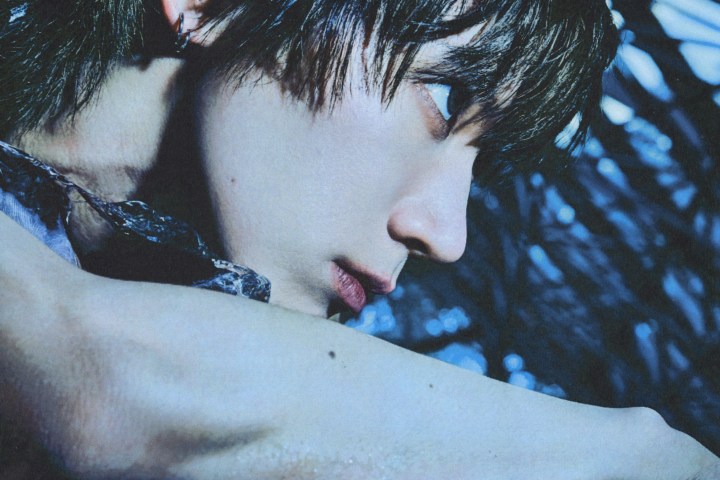
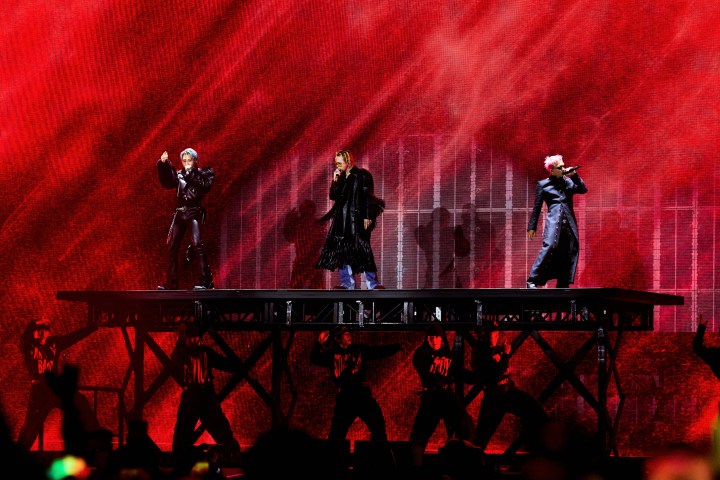
Electrik Seoul is a blend of two things Nino Lee loves: K-pop and EDM. He founded this fusion music event with its first iteration in May 2024 at Academy LA. Since then, he partnered with Insomniac Events to bring the K-pop rave across the North America. The event has begun amping up the K-pop component of the event through collaborations with K-pop artists such as SEVENTEEN, LE SSERAFIM, Girls’ Generation’s HYO. and CLOSE YOUR EYES. Asia Blooming spoke with Lee about creating Electrik Seoul and what it offers to music enthusiasts.
You were born in South Korea and then went to school in Southern California. How did your bicultural upbringing shape the foundation of Electrik Seoul?
Growing up in Korea, going to university, and working in the US, I always felt like I was living in two creative worlds at once. Electrik Seoul was born from realizing those two worlds actually share the same energy. Both cultures are passionate, expressive, and community-driven, and I wanted to build a space where people didn’t have to choose between identities – where K-pop fans could experience rave culture and EDM fans could discover K-pop and the Korean culture behind it.
When you first pitched Electrik Seoul, what was the reaction? What gaps did you see in the festival and EDM scene that made you feel this platform was necessary?
At first, everyone was curious how the event would work, because it wasn’t something that clearly fit into an existing category. It wasn’t just a K-pop event, and it wasn’t just an EDM show. But, that was exactly the point.
I saw a huge overlap in audiences that wasn’t being served. K-pop fans already loved the electronic production, visuals, choreography and high energy experiences but festivals weren’t speaking directly to them. At the same time, I still do believe that EDM spaces lacked Asian cultural representation despite having massive Asian audiences, so I wanted Electrik Seoul to become a bridge between the two worlds.
You’ve collaborated with major acts like SEVENTEEN, LE SSERAFIM, and HYO. What do you look for in a collaborator?
I look for artists who truly understand and value connection with the fans. I believe the best collaborations happen when artists are excited to step slightly outside of their usual environment and provide something unique that fans can’t get anywhere else!
Electrik Seoul now holds stages at major festivals like Beyond Wonderland, Escape, and Lost in Dreams. How did it feel seeing your concept scale to that level?
Honestly, I still can’t believe it is happening. What started as an idea about cultural connection suddenly became something thousands of people were showing up for. Seeing all those lightsticks in the middle of a rave crowd, hearing Korean lyrics sung by fans from completely different backgrounds, I’ve realized the concept translated beyond what I imagined.
What goes into curating an Electrik Seoul stage versus a traditional EDM stage?
A traditional EDM stage is often artist-focused. For Electrik Seoul, we think about transitions between cultures, visuals, fan interactions, and how someone unfamiliar with K-pop or EDM can still feel included. I want every set to feel connected rather than creating separation.
How do you balance the expectations of hardcore EDM fans with dedicated K-pop stans?
We try to highlight what they already share – the passion and the energy. When production, mix, and live moments are done right, both audiences meet in the middle naturally.
With the continued global rise of K-pop, how do you see the genre evolving within Western festival culture?
I think K-pop is moving from being viewed as a niche genre to being recognized as somewhat of a mainstream standard. Instead of K-pop adapting to festivals, I think festivals will increasingly adapt to K-pop’s level of production and audience engagement.
Do you see Electrik Seoul as a brand, a platform, or a cultural movement? Why?
I see it as all three. At its core, it is a cultural movement. The brand gives the identity, the platform gives artists and fans a space, and the movement comes from the community. When fans bring lightsticks to raves or EDM fans discover K-pop through our stage, that’s culture evolving in real time.