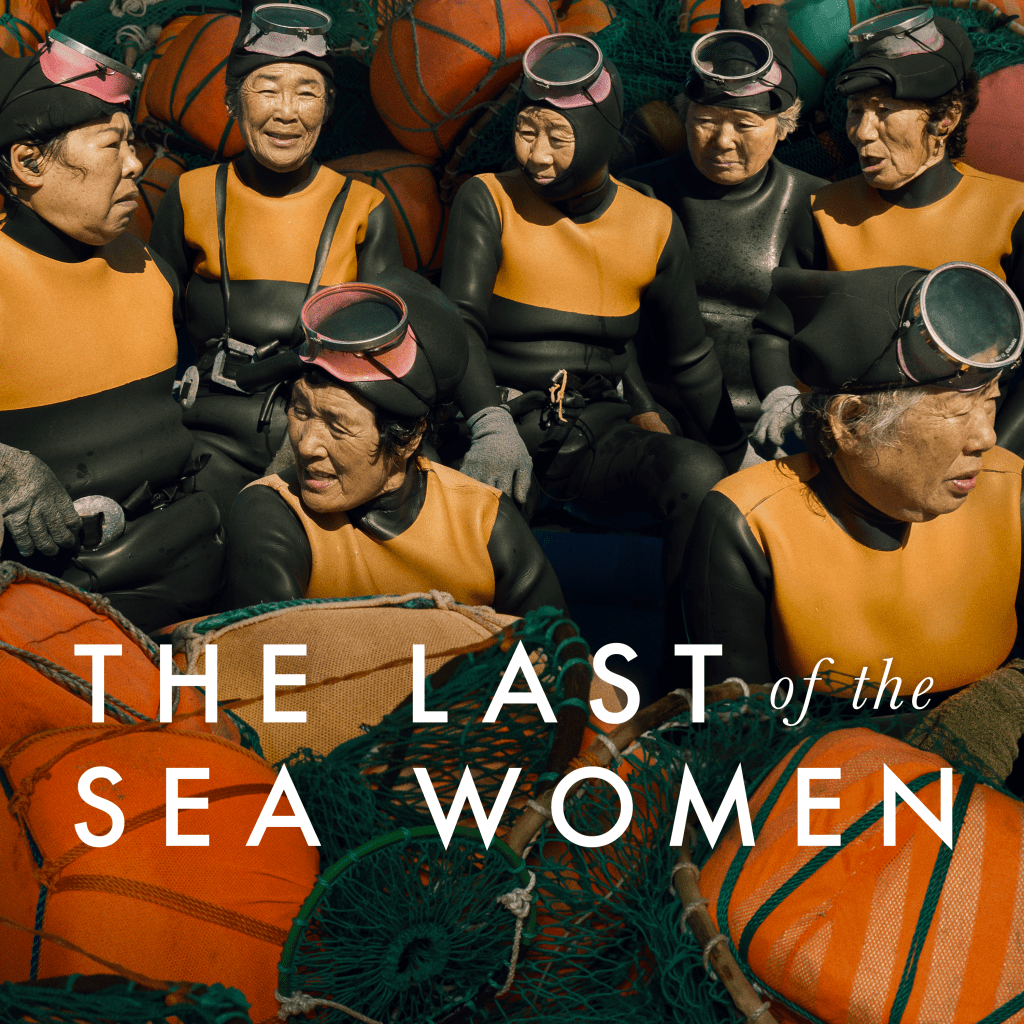

The Last of the Sea Women follows the lives of the haenyeo, the women divers of South Korea’s Jeju Island. For centuries, the haenyeo dive to the ocean floor to harvest shellfish for a living, all without oxygen equipment. Today, there are less than 4,000 working haenyeo, and most of them are in their 60s to 80s. In an effort to protect the ocean and preserve their ancestral lifestyle, the haenyeo, both old and young, band together to raise their voices. In a conversation, director Sue Kim and producer Malala Yousafzai shared with Asia Blooming the process and importance of documenting the story of the haenyeo in The Last of the Sea Women.
To start from the very beginning, director Kim first learned about the haenyeo when she was eight years old. At this young age, Kim saw herself as a tomboy who didn’t fit the traditional standard of beauty and femininity and was in awe of the haenyeo: “I saw a new version of womanhood that was so bold, so confident, and so strong, and I think I just really latched onto them because they represented a new version of Korean womanhood that I could aspire to.” This was an impression that would stay with Kim throughout the years, resurfacing when she became a documentary filmmaker. Exploring the idea of creating a film about the haenyeo, Kim returned to Jeju Island to have conversations with the divers themselves. Upon hearing that the haenyeo believe that this generation will be the last, Kim was compelled more than ever to tell their story: “That was really for me, when the idea of this film took a turn from something like a pipe dream to more of an urgent mandate to make sure that we document and memorialize them while we have them.”
For a couple years, Kim struggled to get the film off the ground. While there was interest in the story of the haenyeo, there wasn’t enough passion – until Kim met Nobel laureate Malala Yousafzai and her production company, Extracurricular. Yousafzai started Extracurricular with Apple TV+ three years ago with the goal of bringing the unique stories and perspectives of women, girls, and people of color to the screen. The Last of the Sea Women was one of the first projects Yousafzai considered, and she immediately was drawn to it. “It was shocking to me, as somebody who has worked in the women’s rights and education space for so long, that I had not actually known about this community of women who have defied and actually redefined the norms for how they want to feel empowered,” Yousafzai began. “I hope that this story will inspire many people just as how it has inspired me.”
In 2021, Kim began production on the film, working with predominantly women teams, both above the line and on the field. This fostered a certain sense of sisterhood behind the camera, Kim said, but there was also a very functional reason for having a nearly all-women staff. The haenyeo are constantly in and out of their communal area, where they shower and change into their wetsuits, so a women crew was necessary to get full access to their daily lives.
Following the haenyeo was one part of the filmmaking process, but keeping up was another. Despite many of the haenyeo being older women, Kim said they are so physically fit that the team was always panting and struggling with their camera equipment as they followed the divers expertly running across rocks. While there was much to admire about the haenyeo’s physical prowess, they had just as much love to give. “The Korean love language is to make sure the people who you love are fed. And that’s what it was like everyday,” Kim explained. During filming, the divers often unintentionally broke the fourth wall to offer sea urchins to the crew, causing the team to cut and take a break to receive the gift. “Working with the haenyeo was quite honestly the greatest joy of my life,” Kim shared. “Every day, there was something that happened in front of the camera that would make us all teary because they’re such incredible, loving, and passionate women.”
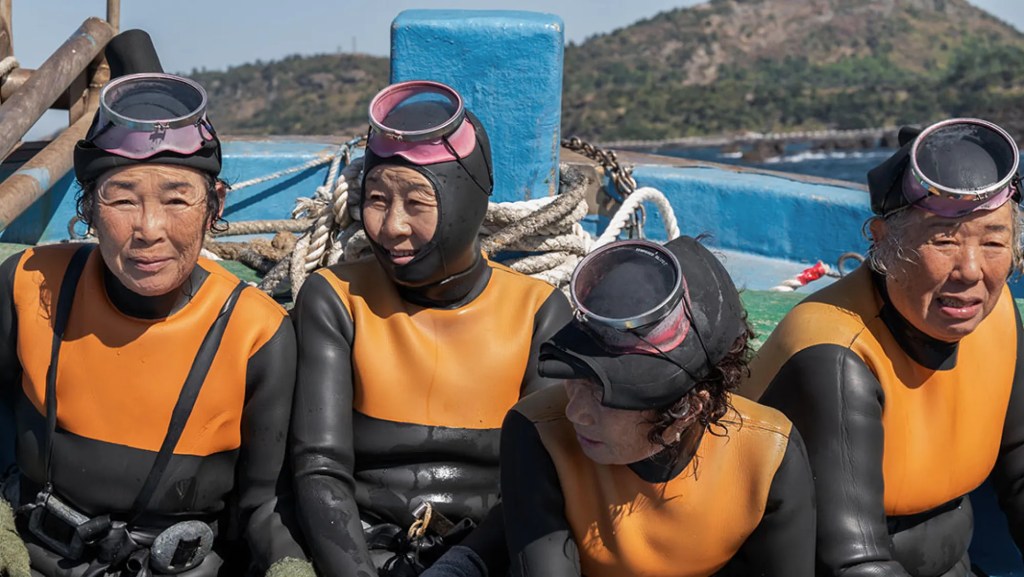
Focused on making observational, verite-based documentaries, Kim began the project to follow the haenyeo during a certain period of their lives: ”I really wanted to focus on this community of women and how there are all these different existential threats jeopardizing their ability to continue into the future.” Being a haenyeo is incredibly labor-intensive, and the environmental issues impacting the oceanic system and marine life make the job even harder and less profitable. With efforts like a haenyeo training school, young divers, though few in number, are part of the new wave to keep the ancestral lifestyle alive. Some like Jungmin and Sohee raise awareness about living as young haenyeo through social media.
The mounting challenges the haenyeo face continue to grow, now including Japan’s plan to release the Fukushima nuclear plant wastewaters into the ocean. This ignited the haenyeo’s fiery spirit to protect the ocean and defend their way of life. “I am personally very inspired as an activist by their courage and their commitment, especially when they hear about the threats to sea life,” Yousafzai shared. “They all come together and they decide to begin their activism. They join protests happening in South Korea, and then eventually participate in the UN offices in Geneva to say that it doesn’t matter how old you are and at what stage of your life you are in. If you believe a change needs to happen, and if you believe an issue needs urgent attention, you need to speak out.” The partnership with Extracurricular and Yousafzai’s reputation helped Kim capture key moments reflecting the haenyeo’s activism in the documentary. “I think because Malala is so respected in the world and is such a beloved humanitarian, we were given access to places, people, and events that I know that we probably would not have been given access to before,” Kim explained. “So besides the fact that just the partnership with Malala was incredible, Malala’s reputation literally opened doors and opportunities for us, like being able to film at the UN.”
At first glance, the diving women’s incredible centuries-long history and life today may seem like a faraway underwater story, but there’s much to take away for those of us who may be more comfortable on land. “The story of the haenyeo is so relevant and important for women anywhere in the world. I think it sends a message of female solidarity. We see that women face challenges in many parts of the world,” Yousafzai started. “What is it that can really give us some hope in this time? It’s the stories of other women who have actually broken some of these chains of disempowerment, and they have tried to redefine what sort of community and place they want to live in.” She continued, “She can dive, she can do the job for as long as she wants, and she can be the breadwinner of the family. Together these women cooperate and collaborate with each other. These values really stood out to me, and it’s relevant for all of us, no matter where we live and what background we come from.”
The Last of the Sea Women premieres October 11 on Apple TV+.