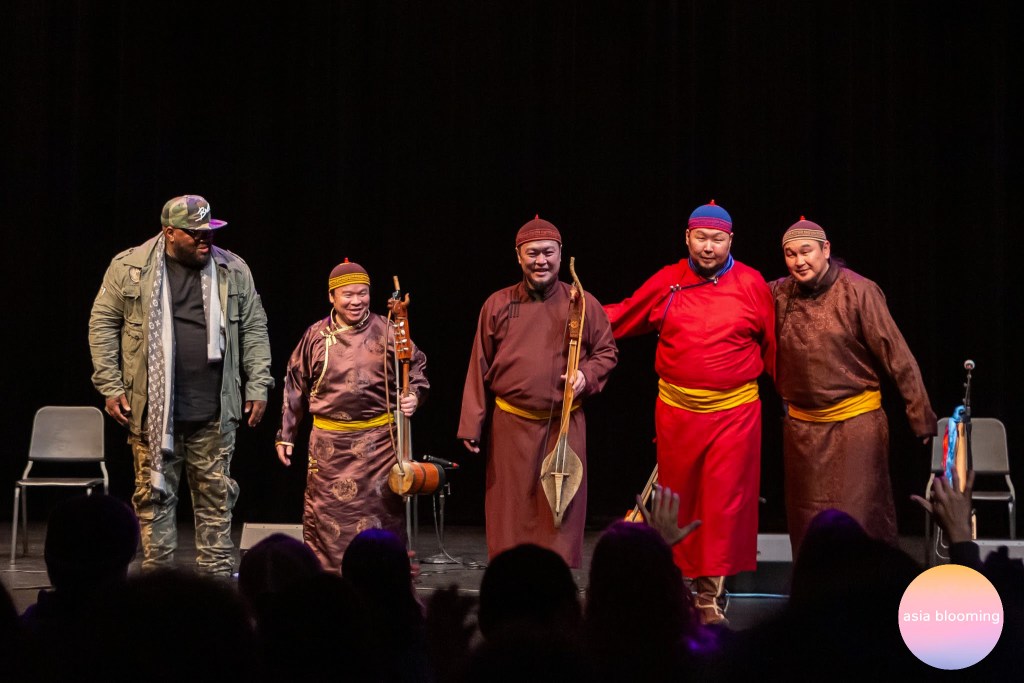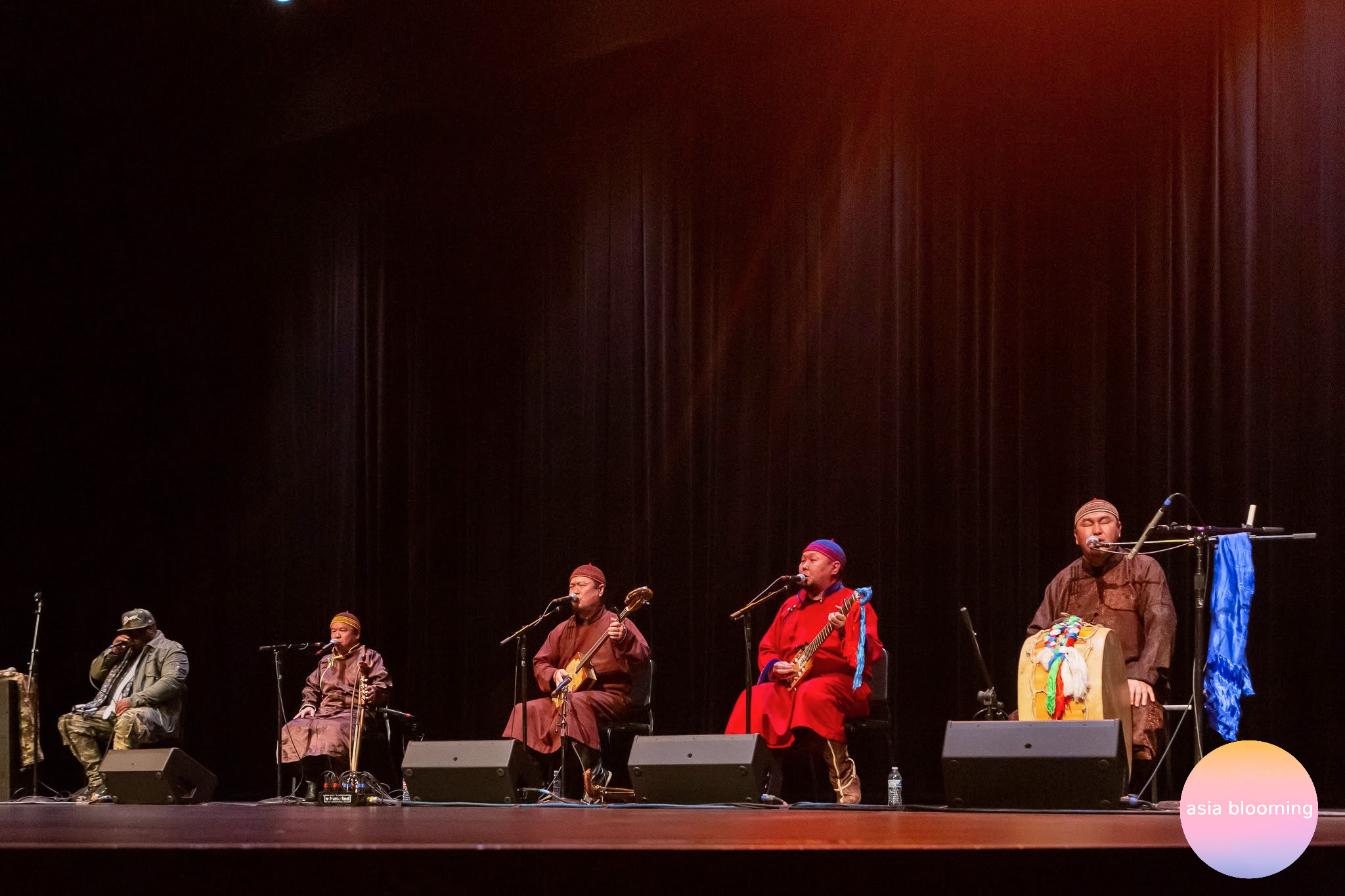
In an era when it seems impossible to unplug from technology, it becomes all the more important for the arts to remind us to reconnect with the sacredness of nature. Alash Ensemble, a traditional band hailing from the Russian Federation of Tuva, does just that, sharing music that reflects their people’s spiritual connection with animals, the land, and their ancestors. The four-piece band entered the stage at Edmonds Center for the Arts clad in traditional robes and fitted caps with a small protrusion at the top. In order from left to right, Kang-Khüler Saaia played the byzaanchy (upright fiddle), Ayan-ool Sam played the doshpuluur (Tuvan banjo) and igil (teardrop-shaped, horse-head fiddle), Bady-Dorzhu Ondar also played the doshpuluur, and Ayan Shirizhik played the shoor (long Tuvan flute), kengirge (large frame drum), and duyuglar (a pair of horse hooves). All four musicians contributed to vocals.
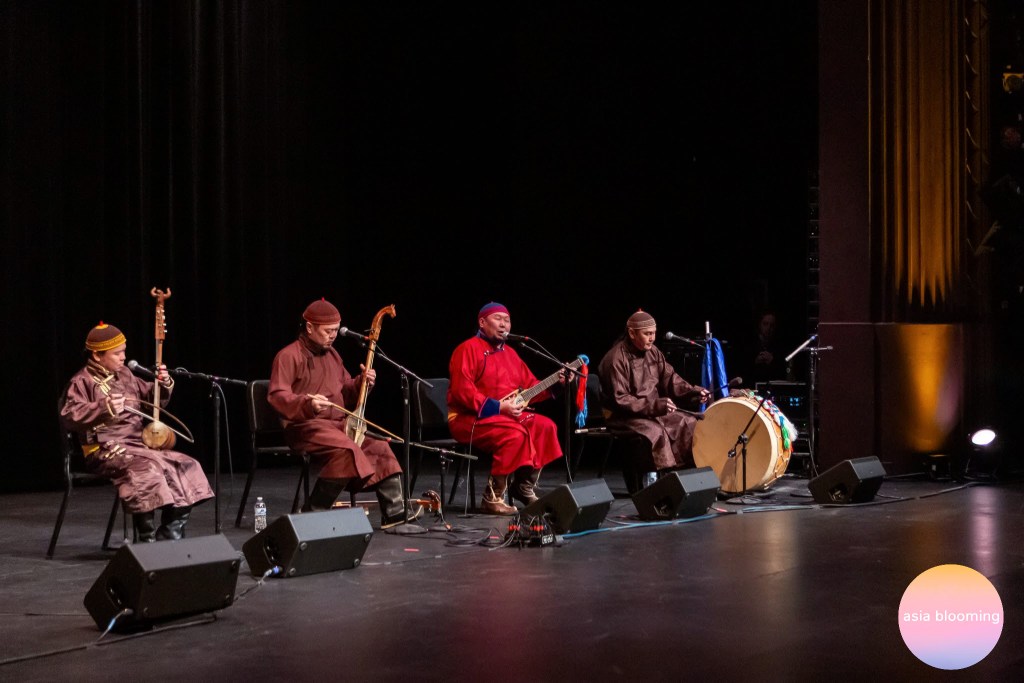
Alash opened the performance with “Ene-sai,” a somber and reverent song that celebrates the deeply touching artistry of Tuvan singing styles. “Kosh-oi and Torgalyg,” which is an ode to two “sister” rivers, featured a soaring shoor solo, emotive vocals, and a rocking doshpuluur accompaniment. It had a beautiful, meditative quality that expressed adoration and gratitude to the river and the people who care for the land. Aian-ool Sam then demonstrated the khöömei style of Tuvan singing, in which the singer produces a low drone and high-pitched harmonics at the same time, adjusting the shape of their mouth to amplify the whistling tones. His breath control and clarity of the harmonics was as easeful as it was stunning.
Joining Alash onstage for the jovial “Eki A’ttar (Good Horses)” was Rahzel, Grammy-winning American rapper and beatboxer, who added a bass-boosted “oomph” to the song without overpowering the other musicians. Even though the beatboxer, dressed in a gray cargo jacket and camouflage pants, was in visual contrast with Alash’s traditional garb, their disparate musical techniques blended together seamlessly. It was incredible to witness acclaimed artists from two vastly different cultural worlds on the same stage, united by a shared passion for exploring the depths of the voice.


In the middle of the set, Rahzel had a solo segment that showcased a fuller breadth of his vocal artistry. It was very different from the techniques practiced by Alash, but no less impressive. He personified a robotic assistant giving a beatboxing tutorial, mimicking the placid Siri voice and the creaks and squeaks of a metal robot moving its limbs. “It’s easy, you can just use the alphabet”, he suggested, before demonstrating a beatbox version of the alphabet. Soon enough, this tutorial segued into performing “If Your Mother Only Knew” with his signature beatbox-singing style, eliciting cheers of awe from the audience. His engaging stage presence allowed the audience to let loose and express their enthusiasm and amazement at his vocal wizardry.
The importance of herding and livestock to Tuvan culture was showcased in songs like “Odarladyp Semirtiili (Let’s Fatten the Livestock)” and “The Reindeer Herder’s Song.” “Odarladyp Semirtiili” was a springy and cheery number that featured the sygyt singing style (high pitched whistle with a barely audible low drone). Towards the end of the song, Ayan Shirizhik’s percussive flute technique and Rahzel’s beatboxing melded to create a delightfully satisfying effect. In “The Reindeer Herder’s Song,” the brush-tipped drumsticks on the kengirge and the gentle plucking on the doshpuluur created a mellow atmosphere upon which the vocals soared. One can hear and feel the Tuvan culture’s devotion to animals and herdsmanship. This almost sacred quality in many of their songs speaks to a reciprocal, loving relationship with nature in which the resources from the land are considered gifts to be stewarded, not commodities to be exploited.
Alash Ensemble’s performance not only showcased the incredible technique required to perfect Tuvan singing, it also illuminated the deep connection between the Tuvan people, the land, and non-human beings. It’s a connection that many in the Western world have been severed from, but the music shared this evening touched upon something within listeners that recognized this connection despite being in a different language. And the innovative pairing with hip hop artist Rahzel further spoke to the connective spirit of music and the continued relevance of cultural values rooted in community and care.