

Warning: This article contains spoilers.
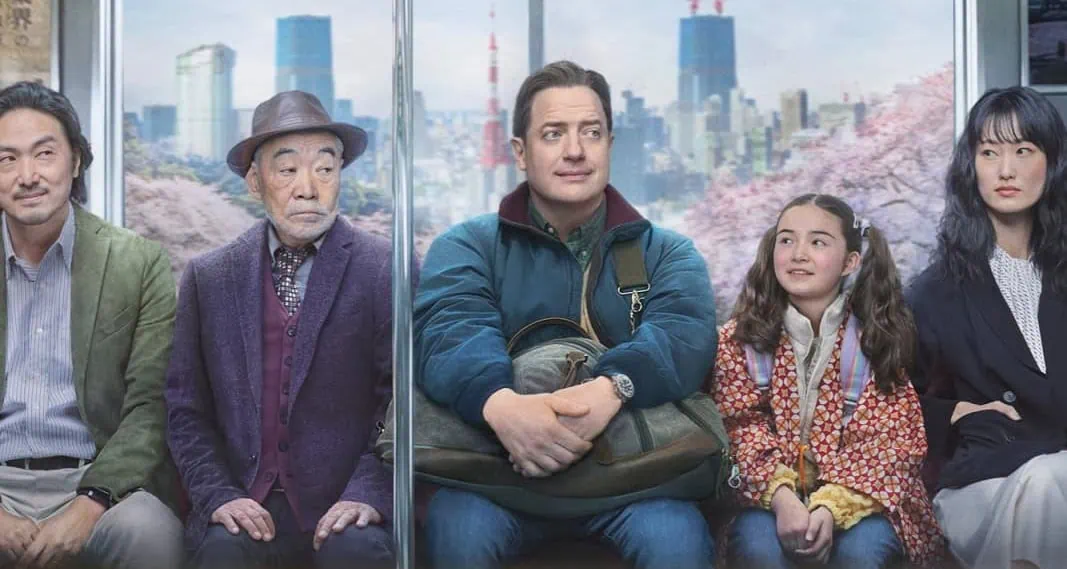
In a generation when birthrates are historically low and loneliness is rampant, a rental family can be the answer for social or practical needs. In the film Rental Family, this unique concept of renting an actor to portray a person in your life—a friend, a lover, a parent—is explored through the lens of Phillip Vandarploeug, an American actor who moves to Japan in search of his big break, only to end up working for the Rental Family Agency.
Phillip Vandarploeug is on his way to becoming a household name. He is starring in a variety of commercials as the “American man” and steadily takes on small projects. Unfortunately, a drop in demand for the role of “American man” leads him to struggle to find work. One day, his agent sends him on a job with just one description—dress formally. Phillip is intrigued to find that the role is a mourning American at someone’s funeral. The catch? The person being mourned is still alive. This is where he meets Shinji, the owner of an agency that recruits Phillip to work as a rental family actor.
Though skeptical at first, Phillip eventually joins the team. He portrays a variety of roles: husband, best friend, reporter, and father. Once he starts feeling emotionally attached to his clients, he faces an identity crisis. The line between himself and his roles blur.
Ahead of the film’s release, producers Julia Lebedev and Eddie Vaisman and composer Alex Somers shared their experiences creating the film during a media screening. Additionally, Asia Blooming spoke with actor Akira Emoto about working on an American production and connecting with the cast and crew.
When producers Julia Lebedev and Eddie Vaisman first heard the idea for the film from co-writer and director Hikari, the concept piqued their interest. “Our first conversations were kind of about the idea and the introduction to what a rental family was,” Lebedev shared. “We had read articles about this weird business, but we didn’t really make much of it. Then, Hikari came in and pitched us this story about a lonely guy in Tokyo, and we were so intrigued. Obviously, we were big fans of her work, and it felt like she could take us into this world in a way that was both authentic and unexpected.”
In Japan, over 300 rental family companies exist today, offering customers the chance to hire stand-ins to fill those empty spaces in their lives. “We were definitely taken aback,” Vaisman admitted. “[We found out that] people use them on the regular, and it spoke to how lonely people are, and how they needed to somehow fill those voids. It’s a bizarre and weird idea, in the best way.” For Emoto, who has lived in Japan all his life, the concept was also quite foreign, and this project is what introduced him to the idea of a rental family as well.
After joining Hikari’s team, the next step was finding the right actors to bring the story to life. “Hikari saw The Whale and, like everyone else, she loved it,” Lebedev revealed on how they cast Brendan Fraser for the main lead role. “What struck Hikari most was the compassion and empathy she saw in a short video message he recorded when he couldn’t attend an event. She said from that moment on, that was her guy.” In a show of determination to cast Fraser for the role, the director even rewrote the script with the actor in mind. “Originally, Philip was a younger, struggling actor,” Lebedev explained. “But, we thought it made more sense for him to have had a burgeoning career that had slipped away. That gave it a new emotional texture.”

With the main star casted, it was time to complete the cast. One particular role that was challenging to cast for was the role of Mia, the young girl whose mother hired a stand-in father for her without her knowledge. “We had two casting directors, one here and one in Japan,” Vaisman began. “Toward the tail end of the process, we found Shannon Gorman, and [like it was with Brendan Fraser], Hikari instantly knew. She was so sweet and innocent, but also had this surprising maturity. It was her first job ever, but she brought it every day. She stood in front of Brendan and did her thing, and we all think she’s remarkable.” Not only were the two actors spectacular on their own, they also had natural chemistry, right from day one. “Brendan really took Shannon under his wing,” Lebedev shared. “He taught her how to hit her marks and helped her through her scenes. He became her biggest fan, and they formed a real friendship.”
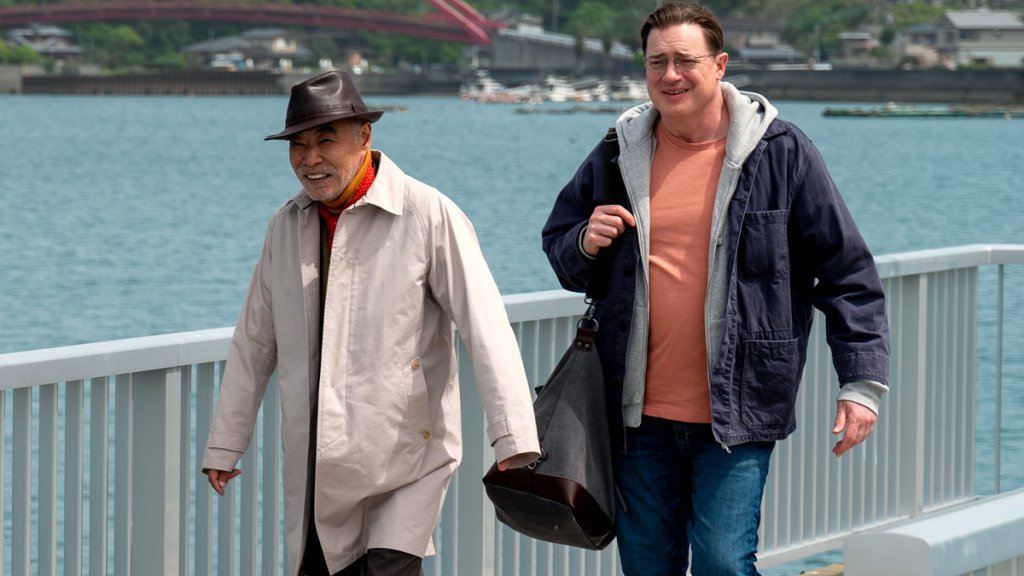
Emoto, a renowned actor in Japan, took on a supporting character role with his portrayal of Kikuo, a retired actor who is facing memory loss. In the film, his daughter hires Phillip to spend time with her father as a reporter, allowing him to live with gusto for the remainder of his days. “I met Hikari, who is Japanese but studied in the U.S., and she brought her Hollywood staff with her. The scale of the production was much bigger than what I’m used to. Japanese films are different—it’s hard to say how, exactly, but it felt very different to me,” he began. “It was mainly just Americans on set, and I’m used to hearing Japanese everywhere. I had wondered to myself why I was there.”
To overcome the language barrier, both Emoto and Fraser studied English and Japanese respectively. “When I got the script, I began to work through it with my language coach,” Emoto began. “I especially worked on my pronunciation of the letters ‘r’ and ‘l.’ I repeated my lines over and over again, many, many times, and I also watched a lot of English TV shows to study their pronunciation. It was a really difficult and challenging experience though.” He added, “Brendan and I couldn’t converse in the same language, but it felt like our communication was happening through our acting. Brendan also just has a very deep kindness to him, and that easily transfers into his role in a way everyone was able to feel.”
Another important aspect to creating the film was through its music. Working as the co-composer, Alex Somers shared that the film’s score was ultimately a collaborative effort between himself and Yosi. The pair felt that the film’s unique concept needed a unique approach to its score. “From the start, we knew the music had to mirror how lost and unfulfilled Philip is in the first act,” Somers started. “We wanted the music to feel like it was coming undone, using half-broken instruments and sounds that fell apart, like him.”
Revealing that much of the score was actually made with a toy instrument, Somers also shared that experimentation was core to this project. “We played with this 1970s toy instrument called the Optigan. It’s this crusty, lo-fi keyboard that plays samples off plastic discs, and we spent an entire day listening to every disc ever made, pulling little fragments of sound and building themes out of them. It gave the music a kind of unpredictability that we loved.” Even with the vocals in the choruses, there was a layer added that could be considered unconventional. “There’s a funeral scene where we imagined a choir,” he began. “Instead of hiring a choir though, Hikari told us she used to sing in a choir as a kid, so we decided to do it ourselves. Yosi, Hikari, and I recorded 16 takes each to create this 48-voice choir, and it kept things street-level and a little messy. I think it’s so boring when things are too professional.”
Rental Family was also quite the project to film, as recording across Tokyo was both a logistical puzzle and an artistic revelation for the producers and crew. “We had a long prep period,” Vaisman began. “Hikari got to test different cameras, scout dozens of locations, and really explore how she wanted to capture Tokyo. Once we got there, though, we realized that Tokyo presented a whole new set of challenges.” Sharing small details they wouldn’t have thought would be difficult, mobility became a big issue. “We.could only fit three people in an elevator, so we couldn’t move equipment easily, and it felt like we were learning to produce all over again.”
Chiming in with agreement, Lebedev shared that these situations also had their own charm. “It was one of those situations where you think you probably shouldn’t do something, but you do it anyway. We didn’t always know better, which was actually freeing, but ultimately, through this process, we really had to let go of rigidity and just experiment. Hikari would say it was fine and that this was how they did it in Japan, and we’d just trust her.” Though originally just a backdrop to the film, they found throughout the process that Tokyo itself had become a character as well. “It was like New York in certain films. We were seeing so much of Tokyo for the first time, and capturing the city was such a privilege. It was so stunning and unique, and if it looked bad, that would’ve been on us,” Lebedev shared.
Through all its logistical hurdles, the film spotlights human connection and found family. “We’ve heard many people say they cried [watching Rental Family], but it’s not just sadness,” Lebedev shared. “The film carries that feeling where you cry and still feel good. It’s an antidote to loneliness, but it gives you that lump in your throat. It’s happy-sad.” Not just for audiences, but the film also created something of a growing experience and bonding opportunity for its cast as well. “Having Hikari and Brendan Fraser watch me act, I know something was born [within me],” Emoto admitted with a smile. “Thanks to them, something new was pulled out of me while I was portraying Kikuo. I really wondered how I contributed, and I’m not exactly sure what it was that happened on set, but there was something special born from it.”
Rental Family will be released in theaters nationwide on November 21.
