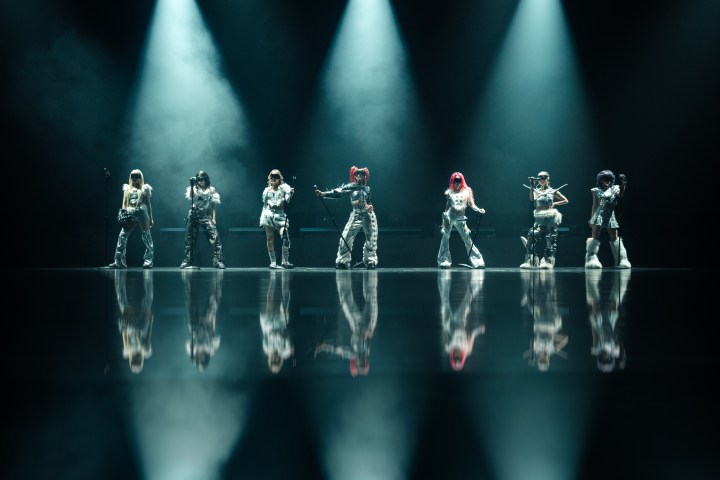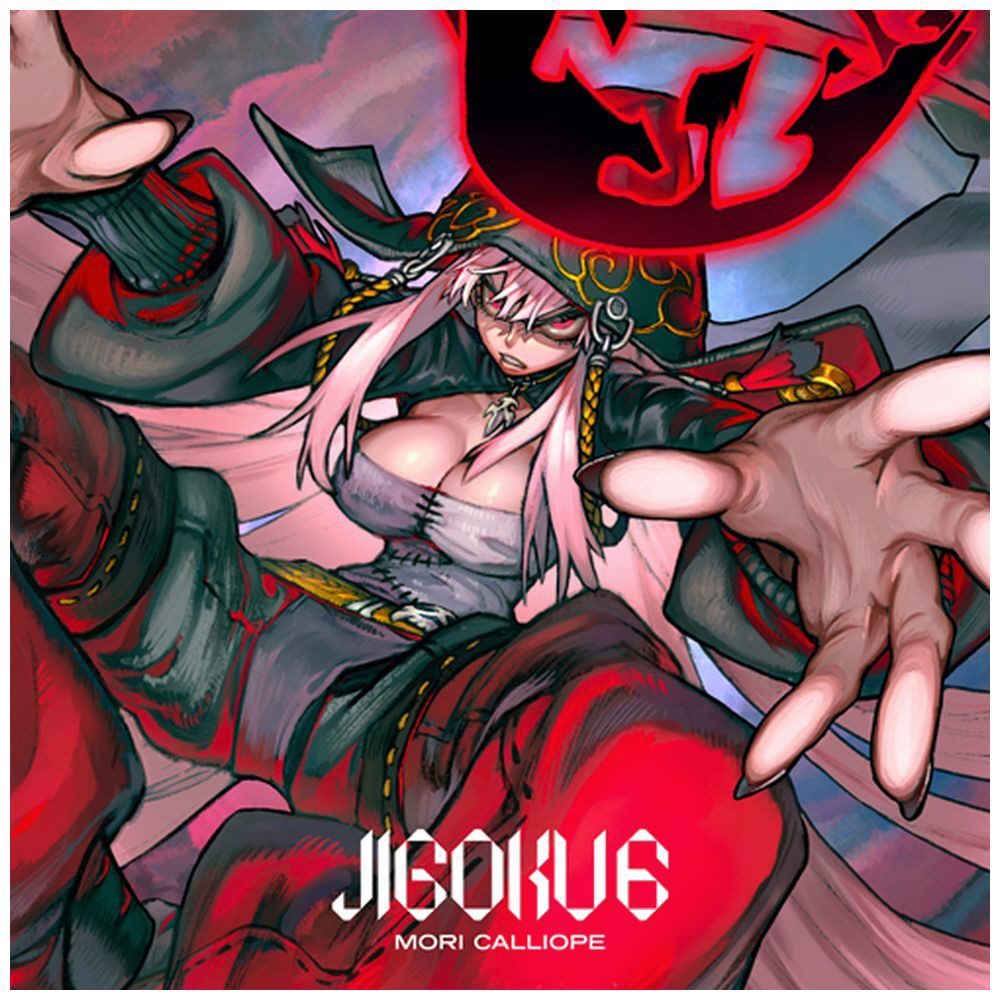

VTuber and musician Mori Calliope’s second major label EP, JIGOKU 6, takes listeners on the descent into hell. The rapper made her references to hell prominent, naming the release a combination of “jigoku,” which means “hell” in Japanese, and the hellish number six. Staying true to the theme of hell, the EP features six tracks, and each one is designed to take you down to the next level of hell. To Mori, this was the natural follow-up to her debut major label album, Sinderella, which focused on the seven deadly sins. “First, you commit sin, then you go to hell. Thematically, that’s a story that humans are told.” Moreover, this was a musical shift for the artist, and she considered how audiences might receive it. “This EP also represents a fall from grace of sorts. I’m changing my genre a bit, which is risky and might not lead to success.”
This leap of faith was driven by the desire to find the right sound. “Consistency is really important when it comes to determining a sound and image for yourself from a branding perspective,” Mori shared. “When I started off my journey, I wasn’t really thinking about that. I still consider myself an amateur musician trying to find my sound.” After initially coming onto the scene with an alternative hip hop sound, the rapper didn’t think it was quite right and didn’t want to force it to work. “I’ve always really loved alternative rock music, and I think combining that together with rap has really helped me find where I fit in like the big musical puzzle.”
A new sound also comes with a new look for Mori. When she found out that Urana Kei, creator of manga Gachiakuta, would be designing her new look, Mori was thrilled. “I’m a big fan of Gachiakuta, and I’ve always wondered what I would look like in her style. To be drawn by one of my favorite manga artists, and seeing myself existing in that world is huge to me. I really love the way that sensei draws eyes and expressions.” Looking at her new design, Mori was immediately drawn to the large flaps attached to the hood. “I have no idea how they work, but I love how it looks intense and outrageous in the best way. The whole look gives Guilty Gear vibes, and it’s what I think [an outfit for] journeying into hell would look like.”
When it comes to writing music, Mori found that her inspiration comes from dissatisfaction. “I feel like if I’m 100% content with my life and everything around me, I don’t want to write. In these songs, I feel like I was able to be more honest with myself.” However, writing music from discontent doesn’t mean that it’s all about wallowing in negativity. “Writing definitely helps me, especially when I can turn something that’s like a bad situation into a nice piece of art. That definitely makes me feel content. It feels like those difficulties and struggles become something beautiful, instead of festering and not doing anything to help me out.”
To fans’ delight, Mori reunited with teniwoha, who produced her entire second EP, Your Mori, to collaborate on JIGOKU 6’s “Left for Dead Lullaby.” “It’s the last track on the EP, so I wanted it to be like the very lowest of the low, the final layer of hell, where there’s basically nothing.” When writing this song, Mori shared that she was at the lowest point of her life, and she injected that melancholy into the song, along with references for longtime fans as well. It’s a song that journeys through Mori figuring out her feelings. What begins as a cry of anger and frustration at herself becomes one at being left behind by other people. However, she realizes that this may have been a result of her own actions. Toward the end, the song becomes more positive with Mori singing, “to bring me back to live again.” Notably, it’s a reference to “Live Again,” one of her first songs she ever wrote in her career and one that was written when she was very happy and when she realized she could use her platform to connect with her fans. “It’s like a prayer of sorts to bring us back to that time someday.”
Teniwoha wasn’t her only collaborator, as Mori teamed up with Reol on “Carousel of Imaginary Images.” Mori couldn’t help but feel honored to work with an artist she admired for so long since the days of Nico Nico Douga. “I love being able to record in the booth with other artists, help each other out, give each other vocal direction.” Before joining Universal Music, Mori would just be in her own studio vocally directing herself, so this was a welcome change. “It was super fun because we got to record and coach each other on both English and Japanese respectively since we both wanted to sing in both languages.”
As for collaborating with TK on “Six Feet Under,” it was a first for her to record in somebody’s personal studio, where she wasn’t even in a sound booth. Mori stood right by TK, who was engineering on the computer, and they exchanged questions and feedback side-by-side. “It really helped the process because we were able to talk to each directly, instead of through a microphone like in a sound booth to an engineer,” she shared. “It felt like a real collaboration slash jam session.”
Through working on JIGOKU 6, Mori came to the powerful realization that making music can be a really fulfilling experience. In the past, she cared a lot about numbers and validation, but this release helped her see that making music is about what makes her feel content. “I know that every single one of those songs is good, and that I gave everything that I had to all of them. And that’s the first time in my entire musical career that I felt that way, especially for it to be like all six songs in the EP to be happy with every single one of them. So I realized that that’s what making music should be.“