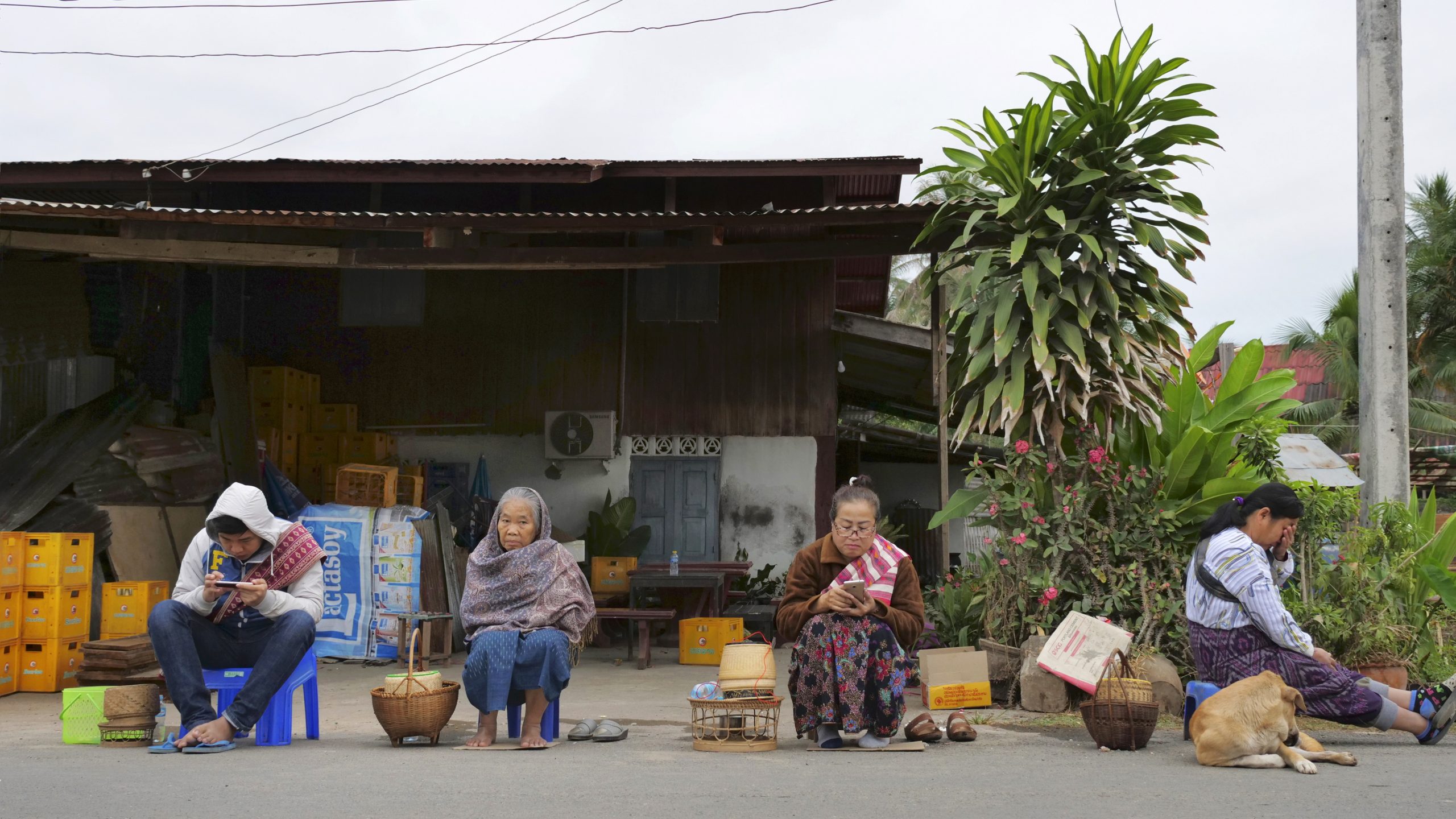
Onlookers (2022), directed by Kimi Takesue, is a contemplative film that stitches together static reels of scenes from Laos and allows for reflections on tourism, seeing, and belonging. Tourists, locals, and the occasional chicken populate the picturesque landscapes and cultural sites featured in the film.
To be an onlooker requires a certain degree of distance between the viewer and that which is being viewed. The film highlights that distance between the tourists and the locals by including members of both groups in the same frame. Often it’s the tourists who observe and photograph the locals, though there are scenes where the locals look on as the tourists engage in recreational activities. Other times, they inhabit the same space but do not interact with each other, in close physical proximity but preoccupied with completely different things.
By juxtaposing how tourists and locals interact with the environment, the film allows the distinction between looking and seeing to materialize. The same physical object or landscape that is being observed will take on completely different meanings depending on who is doing the observing. The same gong that is seen as a curious plaything by tourists becomes an instrument for spiritual practice by monks, and the same river that is treated like a glorified waterpark by tourists is a source of sustenance for locals who catch fish and commute in the waterways. It becomes clear that tourists are often only able to interact with the culture and locals in a very superficial way because they don’t have the embodied understanding that comes from participating in traditions and depending on the land. They often lack the time to be able to gain that context. The film also shows that the richness that comes from belonging to a place is intertwined with the mundanity of tending to that place. While the tourist can photograph and appreciate the intricate designs of the temples, the monk who dutifully cleans and cares for the temple is likely to experience a deeper connection with the space.
The camera stays fixed in each location, and the subjects walk in and out of the frame in a leisurely manner. This slower pace of films engenders a different kind of attention, one of wandering curiosity instead of adrenaline-fueled fixation. The viewers’ eyes are invited to scan the scenes and their ears are greeted with layers of environmental sounds and unintelligible dialogue. This space allows for questions to naturally arise–what are the people in the opening scene waiting for? Why are the two women pouring water into a bowl? Sometimes the questions are answered, but oftentimes they are not. Through the still camerawork, the film does what tourists usually don’t do: sit and look at someone or some place for an extended period of time. It models a gentler approach to being an onlooker, one that honors the humanity of the people you are observing instead of treating their culture as Instagram fodder. However, it requires time, patience, and the intention to slow down–at least two of which tend to be in short supply during jam-packed vacations.
Travelers are often thought of as observers in a foreign place who anonymously peer into the daily lives of locals, the taker of the photos, the experiencer of the experiences. Onlookers is a reminder that even if tourists feel like outsiders just looking in, they have an indelible impact on the places they visit, and, maybe more importantly, they are also being witnessed by other tourists, locals, and, in the case of this film, the camera. The film also shows how the kind of attention and intentionality paid to an experience transforms the nature of that experience. The meditative pace of the film models a way of seeing and observing that allows for more thoughtful engagement between place and people. And that’s a philosophy worth taking to heart, both abroad and at home.