Love Like the Falling Petals is a Japanese romance novel by Keisuke Uyama. Despite first being released in 2017, the popularity of the story continues on even now, seven years later. With published Chinese, Korean, and Thai translations, a two-volume manga adaptation, and a 2022 Netflix film adaptation, the story’s latest iteration came in the form of an English edition, released in January 2024.
The novel follows aspiring photographer Haruto and hair stylist Misaki as they go through the stages of youth and falling in love, against the backdrop of the annual cherry blossom season. Enjoying every moment together as they begin their fresh and new relationship, the two grow and flourish along with the blooming flowers. Just as flowers eventually wilt and disappear, circumstances out of their control eventually tear the two apart. Unexpectedly, Misaki falls ill and begins to shy away due to her rapid-aging illness, yet Haruto’s feelings never waver. With Misaki’s eventual passing, Haruto has no choice but to move forward with life and learn to live and love once again, holding onto the fleeting and bittersweet memory of a once never-ending love.
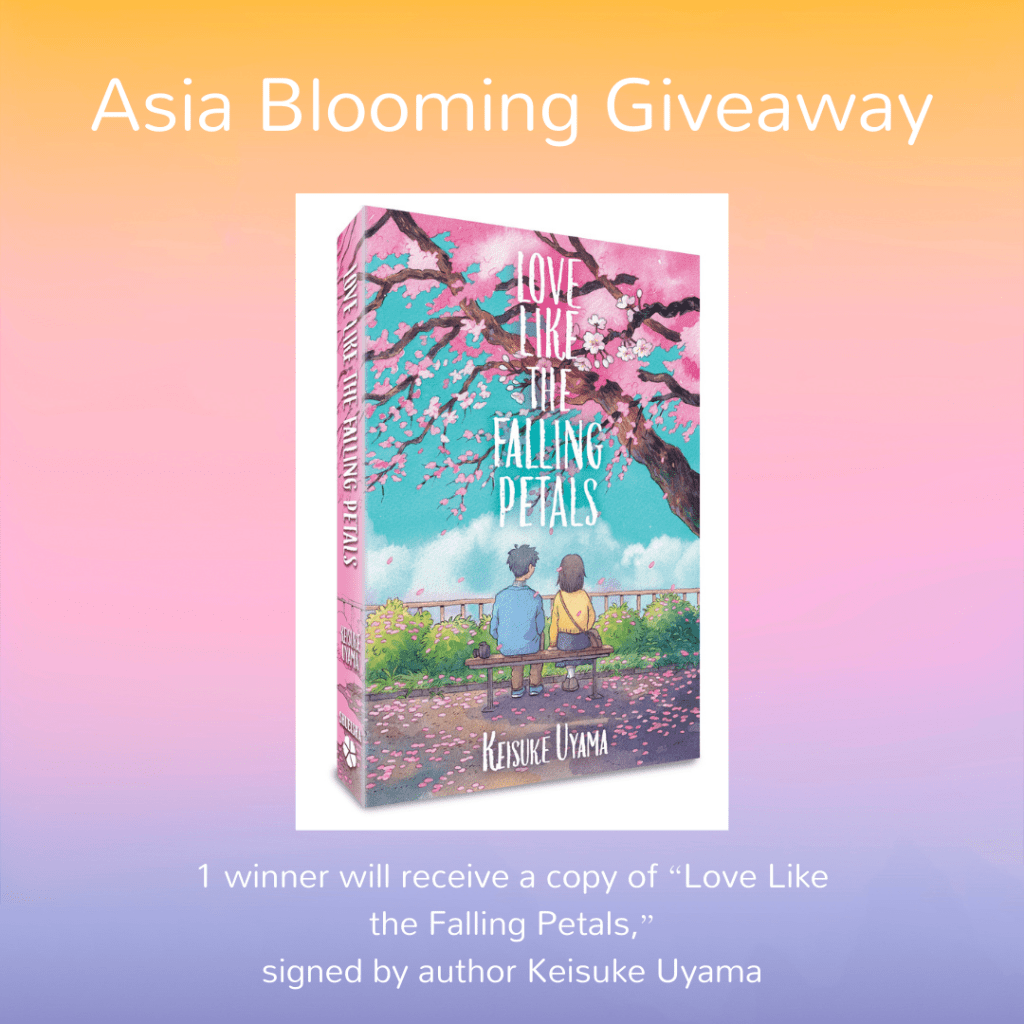
Following the release of the English edition of Love Like the Falling Petals, Asia Blooming spoke with author Keisuke Uyama about creating the heartwrenching love story. Additionally, Asia Blooming is hosting an exclusive giveaway of the English edition of the novel, signed by Keisuke Uyama. To learn more, rules to enter the giveaway are at the end of the article.
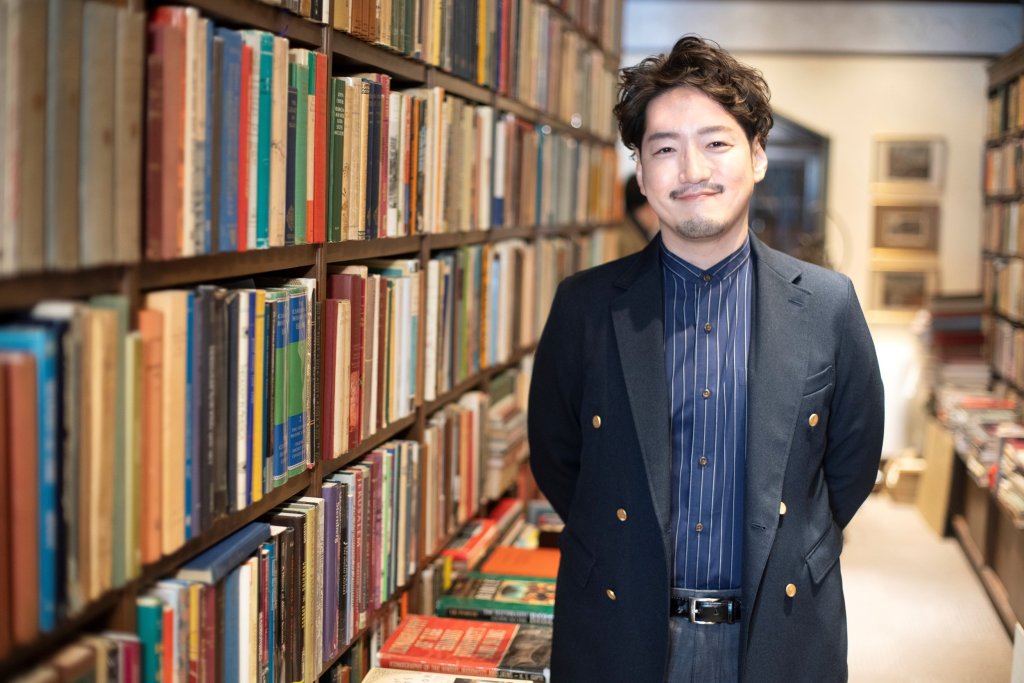
While he is known for writing romance novels, Uyama revealed that romance was not his original genre of choice when he decided to pursue writing. “I wanted to write comedy, but now my works are usually about love and work, because that’s what my mentor [in college] had said were the two most important parts of life,” the author started. “It’s funny, though, because I wanted to make people laugh, but now I make people cry [with my stories].” Attending college as a Japanese Literature major, Uyama was struck with inspiration for Love Like the Falling Petals when he was walking along a corridor on campus one day: “I didn’t know then if I would be able to publish it or not, but in the end, it became my dream to make the story publicly available.” Completely fictional and in no way based on his own personal experiences, the story popped up in his mind like a seed. “I came up with the idea, but I didn’t actually follow through [with the story and releasing it] for several years,” he explained. “When I come up with ideas, I plant the seed like a flower in soil. Sometimes, these ideas will bloom into big flowers, or sometimes small flowers, but [this particular story] actually started with the idea of a female protagonist who falls sick with a rare illness in which she ages quickly.”
Expanding on his usual writing process, Uyama shared that it’s really quite simple. “I normally sit at my desk and take time to think while listening to music,” he started. “Mostly some kind of Western music. For Love Like the Falling Petals, I listened to The Beatles’ “The Long and Winding Road” a lot, and there are actually even songs from The Beatles in the Netflix adaptation film.” When faced with writer’s block, Uyama said that he typically takes a bath or a walk. “Sometimes, if I’m really struggling with an idea, I will walk six to seven miles at a time. Having troubles with my thoughts actually makes me healthier,” he said with a laugh. “Writing Love Like the Falling Petals took a year, and then my editor also revised it, which took another six months or so. Throughout [this whole process], it felt like I walked about 60 to 70 miles.”
Building upon his idea of a sickly female protagonist, Uyama developed Love Like the Falling Petals with a message of compassion: “Cherry blossoms symbolize the heartfelt feeling that Japanese people share, and they’re a beautiful metaphor I felt like would resonate very well among Japanese people. Every year, the flowers bloom, but just as quickly, they’ll fade away. But even with that sadness, the beauty remains in your vision, and we always look forward to the next spring’s cherry blossoms again.” Relating this to Haruto and Misaki, he wishes for readers to imagine their own hopeful future for Haruto. “As an author, it’s my wish for those who read and understand the story to imagine for themselves whatever he’d do and experience in the future.”
In a way, the hope for audiences to see their own versions of a future for Haruto is also symbolic for Uyama. Despite his characters being strictly fictional, he admitted that his characters are loosely based on himself. “Female protagonists, I believe, are projections of my own feelings. And my male protagonists? I think that they are actually the type of people I wish to be. My male protagonists are written with traits that I lack and wish I had.” Aside from the characteristics each of his protagonists portray, Uyama put a lot of thought into other aspects, including ones that seem simple, such as their names. “From the beginning, they already had a connection to each other, and to the flowers. Haruto’s last name is Asakura, which contains the word ‘sakura,’ or ‘cherry blossoms,’ and the kanji for Misaki’s name means ‘beautiful bloom.’”
Finishing the construction of the story, the next step was to publish. The book saw commercial success immediately, gaining translated versions in three different languages, a manga made in partnership with Katou Shushu as the manga artist’s debut work, and eventually a Netflix film adaptation. For Uyama, all of these achievements were already surreal, but the author was even more grateful that these iterations of his work were so well done. “Kento Nakajima, who plays Haruto, was known to be a big fan of the novel. So when the idea for the film came to be, I immediately knew I wanted him to play Haruto. For Honoka Matsumoto, who plays Ariake, she was actually an actress recommended by the film’s producer, who said he trusts her wholeheartedly to bring the character to life.” Although Uyama wrote the original novel, he did not actually write the script for the film itself. However, he did still take part in its making. “I went over the script with the producer. We went over it maybe three or four times, and the producers wanted to make sure that the film would be something that I would be pleased with. There are many cases I know of that the writer of the original story may not be satisfied with the end result of an adaptation, but that is not the case here. The film producer, director, and everyone involved in the project, really appreciated the story and showed so much respect to the story. The film was of high quality and was something I really enjoyed, so I’m very grateful.”
Fast forward two more years, and the novel is now available in English. The English edition was created through a Kickstarter crowdfunding project, and one week after its official release, the book already went into its second print run. “[Having the book translated into yet another language] is so meaningful. If Love Like the Falling Petals was only available in Japanese, then it would only be perceivable by Japanese people, so it’s truly amazing that so many people in different cultures can get to know this story,” began Uyama. “Especially in the case of English, the language is not only used in the U.S., but also globally, so it’s quite amazing that the story can be seen by so many people around the globe.”

With translation work done by Terry Gallagher and book cover variations and artworks drawn by Heikala, @cheseely, and LAL!ROLE, the English edition of Love Like the Falling Petals was the product of a passionate and dedicated team. “Some of my staff members who are native English speakers and readers also read the new version once it was completed, and there were no ambiguities or problems in translation. I truly respect and trust Gallagher, and I’m very confident that his translation tells the story just as well as the original Japanese text,” Uyama began, speaking of the team behind the English novel. “[When it came time for the artwork], Media Do Co., Ltd. sent us some options for the artists, and they were chosen from there. When I first saw Heikala’s illustration, I felt like it was so cute and beautiful at the same time, and it fit very well into the story. She really did a great job.”
Wrapping up the conversation, Keisuke Uyama once again expressed his gratitude for how far his story has come. From a project he was unsure he’d ever be able to publish, to a novel published in five languages with film and manga adaptations, the author also hopes that the story does not end here. “If I could, I would love to see the story translated into every conceivable language in the world, so that it can reach people from all cultures.” Dreaming big, he finished his thoughts with an ambitious half-joking comment. “Maybe Shueisha will make the story into an anime, too!”
Asia Blooming is hosting a giveaway on Twitter and Instagram for one lucky winner to receive a copy of Love Like the Falling Petals, signed by author Keisuke Uyama. Entrants can enter the giveaway on either Twitter or Instagram. Enter on Instagram and Twitter to increase your chances of winning!
To enter the Twitter giveaway:
- Follow Asia Blooming on Twitter: @AsiaBlooming
- Retweet the pinned giveaway tweet
- Bonus entry: Tag a friend in a comment for additional entries. Each comment with a tagged friend is one extra entry.
To enter the Instagram giveaway:
- Follow Asia Blooming on Instagram: @AsiaBlooming
- Like the pinned giveaway post
- Bonus entry: Tag a friend in a comment for additional entries. Each comment with a tagged friend is one extra entry.
Only U.S. participants are eligible for this giveaway. Giveaway accounts are not eligible to enter. The giveaway closes at 5:00pm PT on February 9, 2024, and the winners will be contacted shortly after. Good luck!