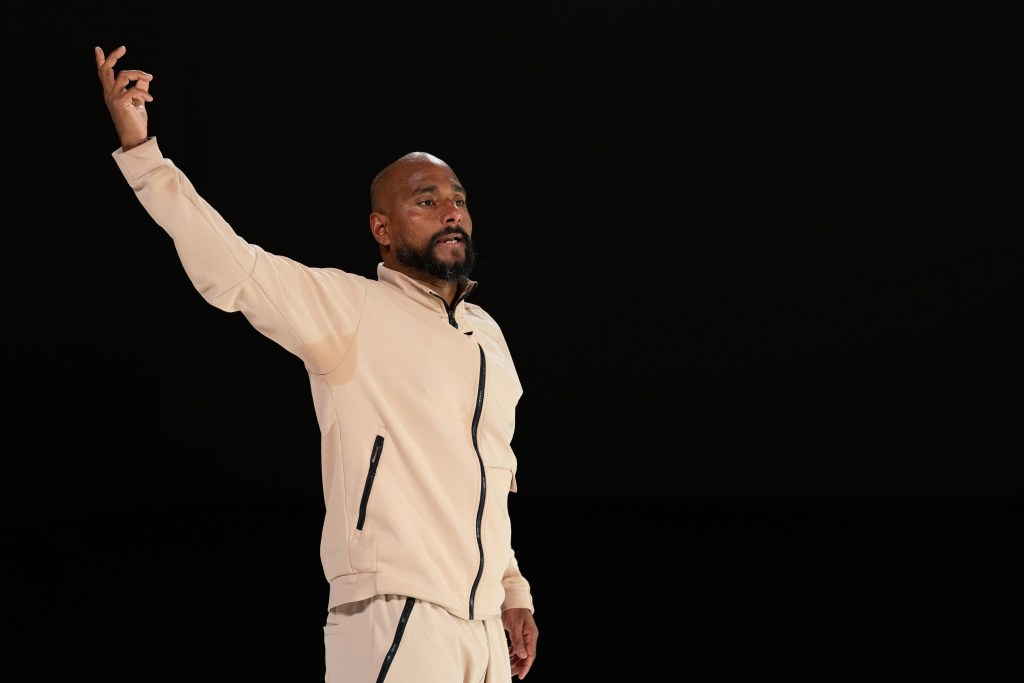
because I love the diversity (this micro attitude, we all have it) is an autobiographical dance theater piece that illuminates the microaggressions (and macro-aggressions) experienced by performer, choreographer, and educator Rakesh Sukesh as an Indian in Europe. It’s a collaboration with Alessia Luna Wyss, who handled dramaturgy and set design, and Marcus Youssef, who helped write the script and served as an acting coach. Sukesh performed at Portland Institute for Contemporary Art (PICA) in April before heading to New York for his only other US performance. The brief nature of his visit was determined by visa limitations, and this time, as he explained in the show, was not the only time visa issues have interfered with his ability to teach and perform.
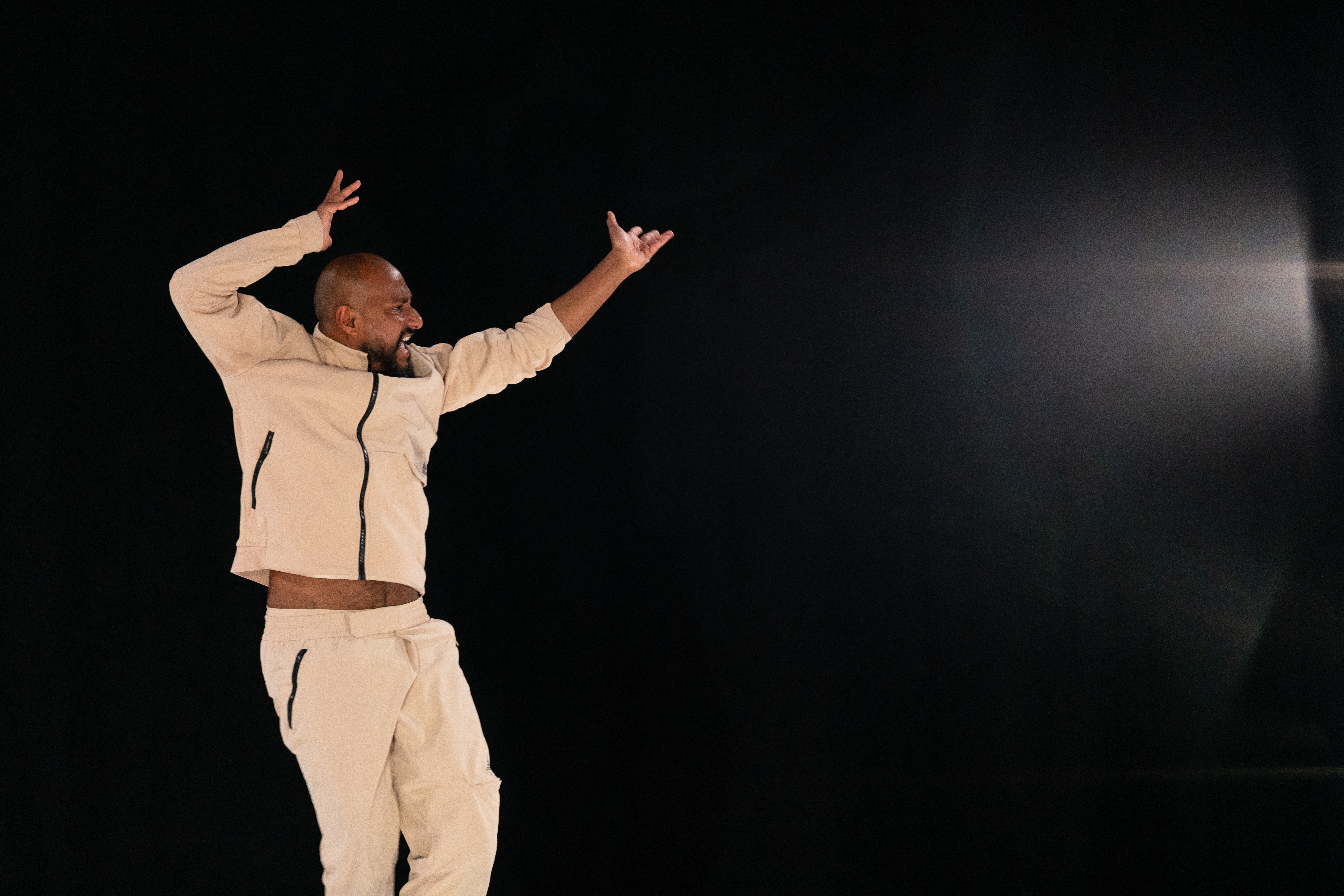
As we start to see the world through Sukesh’s eyes, we witness the subtle, sometimes insidious ways the world tells him “you do not belong (as you are).” It’s the way he restricts his movements when attempting to fit into a ballet posture–there are a couple awkward pirouettes. It’s the way his friend tells him that his performance style is “too expressive, too wild,” that it scares people. It’s the way his body contorts into angular shapes and the way his hands tense up to make a talon when he recites moments of “othering.” Even when he was invited to teach (finally, a welcoming?), it was to teach Kalaripayattu, a high-energy, at times acrobatic, martial arts technique originating in Kerala, India over two thousand years ago, partly because it was considered interesting and exotic to contemporary dancers in Europe. It’s a tenuous inclusion that relies on showing up in a way that is just different enough to invoke fascination, but not so different that it makes people uncomfortable.

The most dramatic instance of xenophobia was the time when he was walking around in Estonia. He walks from one side of the stage to the other, and back to the first side. What seems to be a news broadcast in an indistinguishable European language is transmitted over the speakers. He looks around the stage, and he tells us that he noticed someone photographing him. He didn’t think too much of it until one day he found out that his face had been used in right wing anti-immigrant propaganda. His hands physically grapple with this experience, pushing it away from his body, eventually throwing it away and smashing it into the ground. It’s a physical manifestation of what it means to wrestle with an experience that made him question his sense of identity and belonging.
Sukesh engages directly with the preconceptions, which are usually misconceptions, that Westerners usually have when engaging with practices from his culture. There’s the moment when he takes a wide squat, opens his eyes and mouth wide, sticks out his tongue, and bends forward in an exhale. Having taken his workshop just before the performance, I recognized this as Lion’s Breath, a cleansing exhale that clears waste air from the body. Like a footnote come to life, Rakesh also offers an explanation to folks who are not familiar with Yogic breathing techniques. These teaching moments come from both a place of generosity and also from a place of self protection; this way, he gets ahead of the misconceptions that his movements are unsophisticated or unintentional. On the contrary, he intentionally incorporates practices that don’t fit into the Western idea of “sophistication” and helps the audience understand how limiting this idea is. Another example is the loud foot tapping sound that sounds like a stomp, but Sukesh clarifies that it is a technique from Kathak dance that requires a very specific foot placement to make the resonant sound without injuring the heel.
He tells us how in Spain, multiple store clerks assumed that he was a food delivery gig worker. He walks off the stage towards a large square backpack and walks back onto the stage, a wide smile plastered to his face. He pulls out large pizza-shaped boxes–what an interesting prop–and, in an unexpected turn of events, he opens the boxes to reveal actual pizzas, which he offers to the audience. We’re baffled, but we are not going to turn down a mid-performance snack. Was Sukesh filling the role the store clerks imagined him as, or conducting himself per the Indian teaching of “Atithi Devo Bhava” that posits that guests should be treated as if they were God? Perhaps a better question to ask is why our society thinks so lowly of service workers when other cultures consider serving others as a moral duty?

A turning point in the performance is when Sukesh drags a large piece of fabric from underneath the long black curtains at one end of the stage. He pulls and pulls until the multicolored fabric stretches all the way across the stage, and after the lights dim down, he slowly peels his sweat-stained tan tracksuit off and hangs it on an airborne set of hooks. Perhaps it’s a metaphor for shedding the version of himself curated for a white gaze and embracing his cultural roots. As he rips a piece of the fabric and starts sewing, the sound of an Indian woman speaking comes through the speakers. We learn that the woman is his mother, and she is not happy about his life trajectory. “You could have had a good, stable life in India close to our family,” she admonishes. It’s a vulnerable thing for him to show this and to admit that he feels regret and guilt for moving away from his family. He wraps himself in the cloth (a makeshift sari) and makes his way across the stage underneath the fabric, a writhing and punching silhouette in the deep blue light. It ends with standing on a cube (a soapbox) and sharing the concept of “rasa,” which translates to the aesthetic essence of an art piece. “Maybe you felt rasa during this performance” he muses, and then the lights go dark.
The performance exposes the pervasive, if at times hidden, experience of racism, and it also shows the ways Sukesh moves through these experiences, which range from uncomfortable to unconscionable. It’s also the only performance I’ve ever seen where the performer doled out pizza, sewed his own clothes, and used a stage-length piece of fabric. Vulnerable and inventive, the performance deftly examines perception, culture, and identity in a world where not everyone is allowed to belong.