Sparks of Tomorrow follows Kihachi and Inako who seek to usher in the age of electricity in an alternate, steam-powered Kyoto with the help of the 20th Century Electrical Catalog. However, time is of the essence when they learn they’re not the only ones after the mysterious book. Ahead of the anime’s premiere, Asia Blooming sat down with director Minoru Ota at Anime Expo 2026 to discuss his directorial debut with Sparks of Tomorrow, shaping the series’ visual identity, and balancing drama and humor to tell an adventure of resilience and ambition.

Ota’s journey with Sparks of Tomorrow began when he saw an opportunity to take on a new challenge. Known for his work on Sound! Euphonium and Violet Evergarden, he expressed his interest when Kyoto Animation began looking for a director to adapt the KA Esuma Bunko novel into anime. “I felt like the characters and story were well developed, so it had great potential as an anime adaptation,” he said. “The important elements I wanted to highlight are the boy-meets-girl story of Kihachi and Inako and their travels from Kyoto to Shiga.”
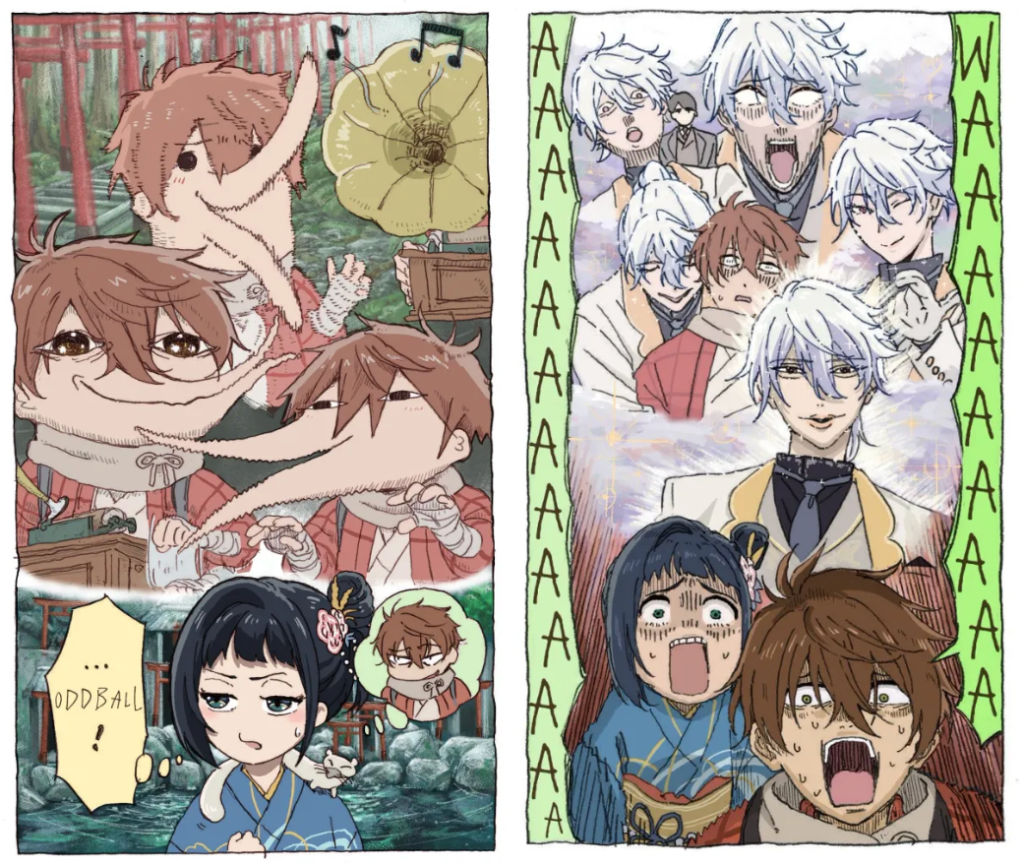
To communicate his vision to the production team, Ota relied on his strength as an artist. “I’m good at drawing manga, so I drew short manga panels for key scenes and shared them with the team,” he said. Those illustrations were also meant to help visually establish the characters’ personalities and the tone of their respective storylines. Ota singled out two scenes in particular: Kihachi and Inako’s first meeting, and Yosuke’s introduction as he sits alone in the dark. He explained the contrast between the two scenes was intentional. “Kihachi and Inako’s meeting takes place at a shrine that actually exists, so there’s a sense of realism to it. On the other hand, Yosuke’s scene sitting alone is set in a place we imagined. By showing the contrast between these scenes, I wanted to make sure the team understood the breadth of the story.”
He also took a distinct visual approach to the series’ setting, blending early 20th-century Kyoto with an industrial, steam-powered aesthetic. While it was important for the world to feel grounded in reality, Ota also wanted to make clear that it was an alternate version of Kyoto. “I didn’t want it to be Kyoto as it is. I wanted it to have a bit of a gloomy color palette,” he explained, noting that the darker tones helped create a more dramatic atmosphere. At the same time, he emphasized that the team did not want to lean too heavily into the steampunk elements, in order to maintain a sense of realism. That idea also shaped the background art. Ota said the team aimed for an impressionistic style that would give the series a striking visual identity. “As the background art takes up the majority of the frame, that’s what people see the most. I wanted to make it stand out.”
Achieving that balance proved to be one of the production’s biggest challenges. Ota revealed that the team spent roughly six months experimenting with the art direction. “We decided to take an analog drawing approach to the background art, yet we took a digital approach for the characters. Once we combined them together, the visuals looked unnatural, so it required lots of minor adjustments to strike the right balance between both digital and analog approaches.”

Anime Expo hosted the world premiere of the first two episodes of Sparks of Tomorrow, giving Ota the chance to experience the series alongside a live audience. He said one of the highlights was hearing the crowd erupt with laughter during key comedic scenes, including Kihachi’s panicked reaction after Yosuke mistakenly hugs him and calls him his wife and Kuga’s over-the-top chase sequence, which ends with his smelly shoe flying into a baby stroller. Those moments were especially meaningful to Ota because he views comedy as an essential counterbalance to drama. “I wanted to create an entertaining work, where audiences have fun, and it doesn’t become too tense. The bigger the range of comedy and seriousness, the more effective both elements can tell a dynamic story,” he said.
Ota traced that philosophy back to his upbringing in the Kansai region and his love of the long-running comedy stage show Yoshimoto Shinkigeki. “I grew up watching it [the show], and there are comedy elements that have nothing to do with the story, but it’s hilarious. The elements are there for comedic purposes, but underneath is a very human story. I feel like all people in Kansai grew up with this, so we have this type of humor inside us.” He concluded, “Comedy is not a necessary element to move the story forward, but it is a necessary element to tell the story.”
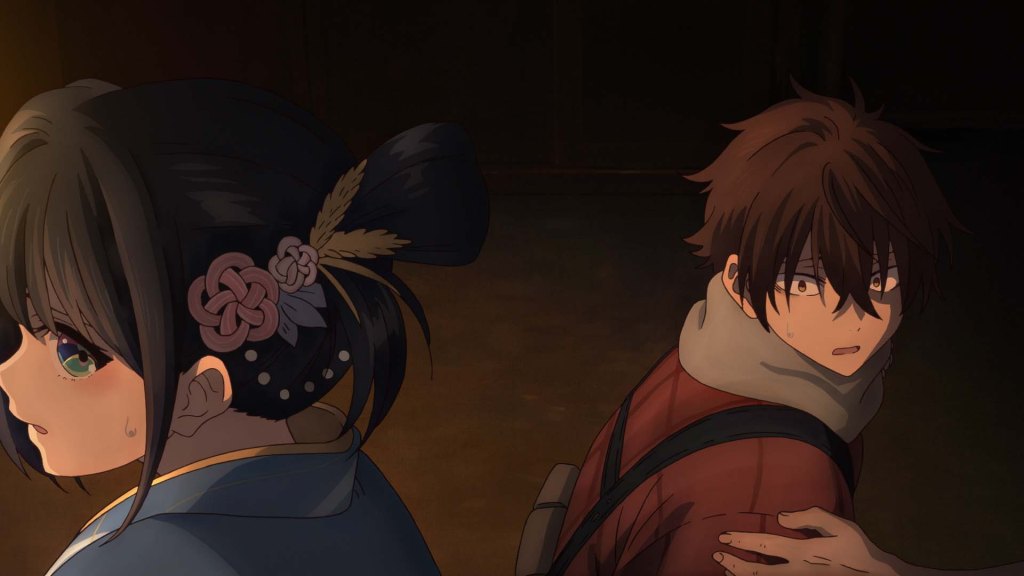
For Ota, the heart of Sparks of Tomorrow lies in its message of perseverance: “In the story, all the characters start in a place of setbacks. Some people have given up their dreams, and some have lost somebody important to them. It’s a story of regeneration. They stand up again and strive for what they want. I hope the characters’ story inspires the audience.”
Sparks of Tomorrow is now streaming globally on Netflix.