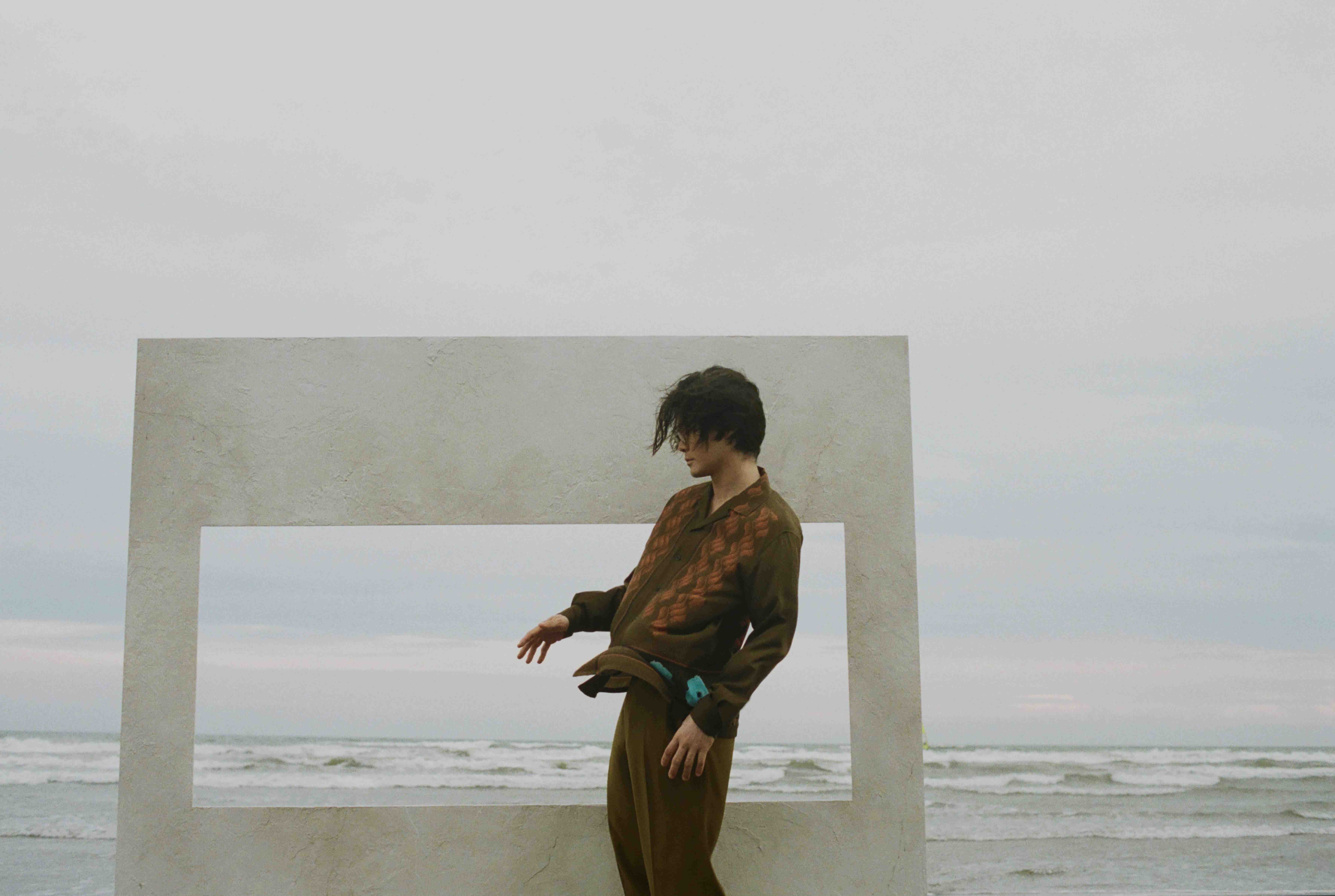

Centimillimental, singer-songwriter and composer also known as Atsushi, dropped his sophomore album, Cafuné, this summer. Additionally, he announced his first ever world tour, including stops across Asia and Latin America. While the artist is touring Japan, Asia Blooming connected with Centimillimental to discuss his origins, musical contributions to BL anime Given, latest music, and first international tour.
To start from the very beginning, could you share the origins and meaning of your stage name, Centimillimental?
Atsushi: When our emotions are stirred, we naturally feel sentimental. Not just in sad moments, but also in those quiet, reflective times—like when you’re heading home alone after a really great day. I wanted to express these everyday, nuanced feelings of sentimentality in various ways. That’s why I combined the word “sentimental” with units of length, “centimeter” and “millimeter,” to create the name Centimillimental.
You’ve been active on the music scene since 2012, and you started off as being part of a band. Is there anything you took from your time being in a band into your career as a solo act?
Atsushi: Having originally trained in classical piano, I used to feel quite uneasy about playing with others and building a shared groove together. But through my experience in a band, I came to truly understand the challenge of that collaborative process—and at the same time, I discovered a new kind of joy, emotional depth, and excitement that I simply couldn’t reach on my own. I think that experience has had a big influence on the way I approach music today.
You’ve played an integral role in the anime, Given, composing, arranging and writing lyrics for many of the original songs featured in the TV series and films. What was your approach to creating music for the story? Was there a particular mindset you adopted or anything particular you were mindful about when working on this project?
Atsushi: I was careful not to create music that simply slices the story into parts or dilutes it. I wanted the songs to make the emotions feel more real and human, with a sense of warmth and immediacy. To achieve that, I often drew from my own memories and personal experiences while creating the music.
While working on Given, what was the most memorable song to you – whether the song was challenging, thought-provoking, fun to write? Why?
Atsushi: It’s hard to pick just one, because I have a deep attachment to all the songs. But if I had to choose, it would probably be “Fuyu no Hanashi,” which was the piece that first got me involved in the project. Collaborating on an anime was a completely new experience for me, and since the original work was already very popular, I felt a lot of pressure not to create something that would go against the fans’ expectations.
It’s not often that somebody has the opportunity to create music continuously for a long-running story. How would you describe your musical journey with Given?
Atsushi: Walking alongside the story of Given gave me the chance to look back on my musical career and reflect on my life so far. I feel proud that we were able to grow together and reach new emotional landscapes, creating shared memories along the way. It’s truly an irreplaceable experience in my life.
You recently released your second full-length album, Cafuné, in August, but this was many years in the making. What was the process of putting together this album, and was it different from your first?
Atsushi: When I released the single “Yuigon,” it was a song I had cherished for a long time, and it also marked a kind of conclusion for the Given series. That felt like a natural turning point, and it led me to start working on the album. Compared to my first album, I feel that while the debut focused more on sharpness and intensity, this time there are more songs that convey gentleness and softer expressions.
This album explores the many facets of love. What makes love such an inspiring subject to you?
Atsushi: I think it’s because love is a feeling and a right that’s given equally to everyone. The warmth of love in our hearts is a theme that transcends words, culture and gender—it’s something anyone can empathize with. While this album focuses on love as its central theme, I feel it’s a topic I’ll continue to explore in my music going forward.
How did you go about arranging the track list of “Cafuné”? I found it really interesting that you began the album with the yearning song, “Kimi Omou Yoru,” and ended with the bittersweet track, “Ai no Shoumei.”
Atsushi: I arranged the track list with the flow of love’s dual nature in mind, as well as the transitions between meeting and parting. I feel this album was able to express both the gentle and passionate sides of love, as well as its tenderness and fleeting beauty.
You also have plans to embark on your first world tour to promote this album, starting in November. Congratulations! How are you preparing for this tour?
Atsushi: Thank you! I’m currently touring in Japan for Cafuné, and I hope to carry the feelings and experiences I gain from these shows into the world tour. So first, I want to give everything I have during the domestic leg, and I hope fans will look forward to seeing an even more energized and evolved version of the performance afterward.
This tour will take you to cities across Asia and Latin America. What do you hope to experience while on tour?
Atsushi: Since many of the places on this tour are cities I’ve never visited before, I want to treasure the new sights, cultures, and interactions with people as personal experiences. I also hope to bring what I would learn and feel on this journey into my future music.
What can attendees expect at your show?
Atsushi: Even if words can’t be shared directly, I aim to deliver passionate performances full of soul that can be felt by everyone. I believe that by the end of the concert, there will be some emotion taking root in each person’s heart. Please look forward to it.
Lastly, do you have a message to your overseas fans?
Atsushi: Thank you always for your warm support. Your voices truly keep me going. I’m really looking forward to the day I can meet you, so please wait for me. I’ll see you at the concerts!