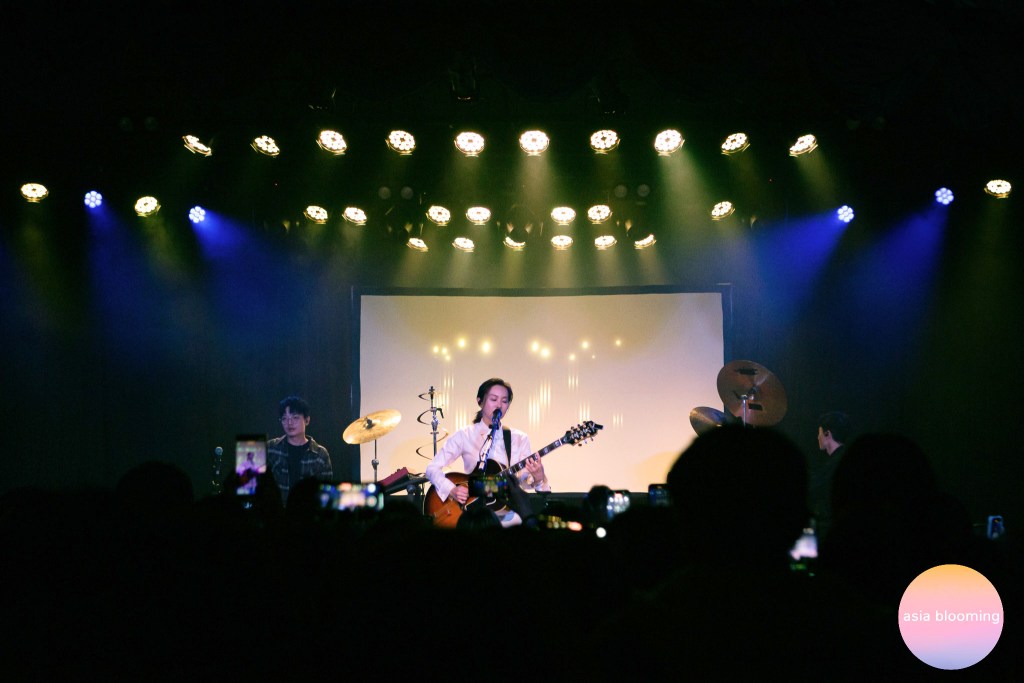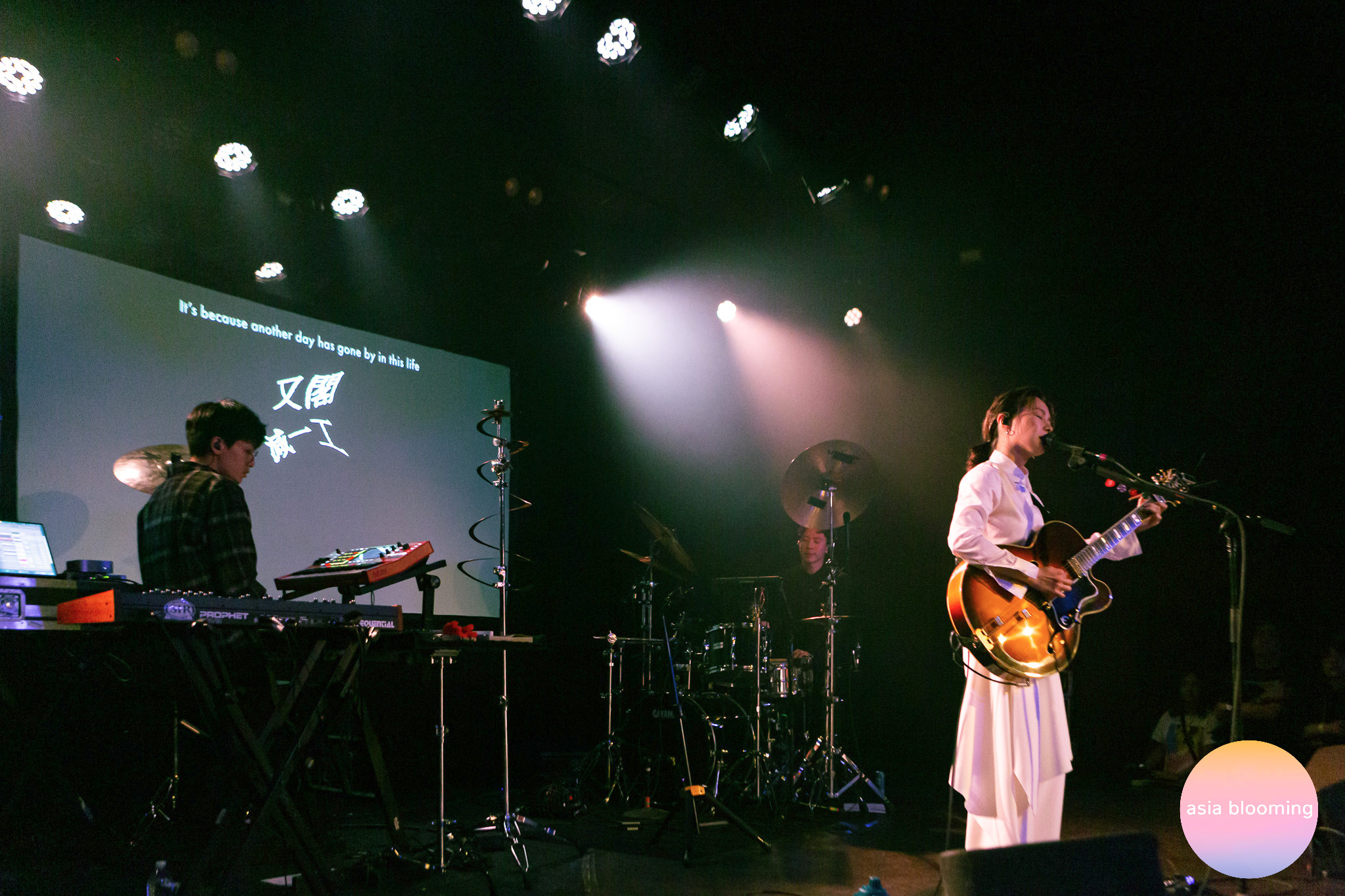
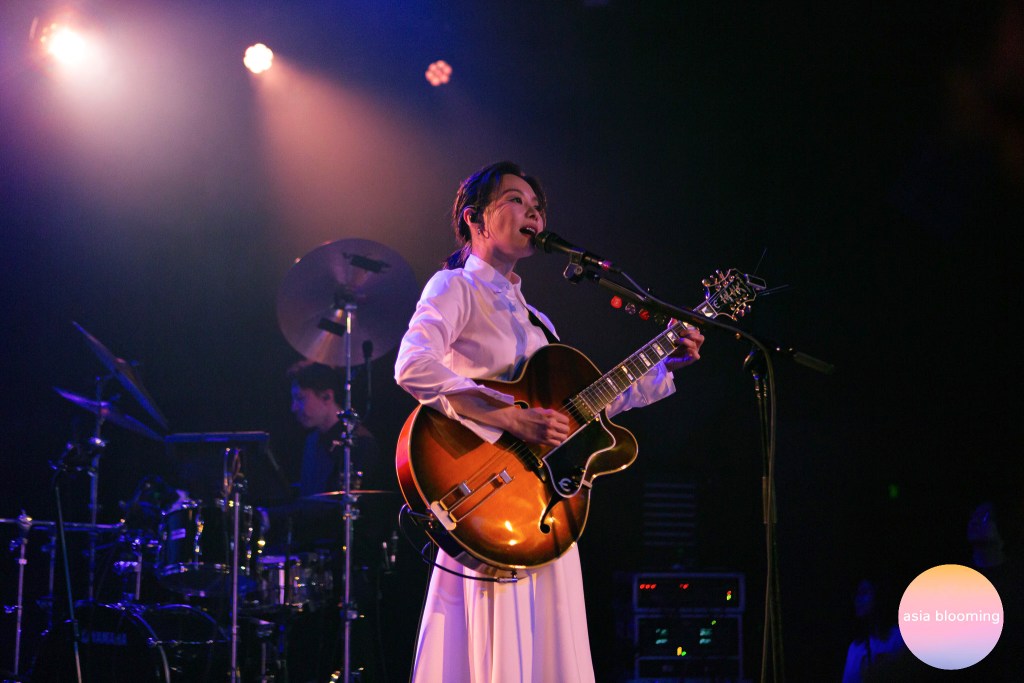
Taiwanese singer-songwriter Enno Cheng’s specific brand of alt-pop is hard to categorize — she incorporates electronica, rock, jazz, and folk elements into a texturally rich, pulsating soundscape. Her ever-so-slightly husky voice gives the impression that she just finished a good cry, which, given the emotionally-laden lyrics of her songs, would be totally plausible. She brings back the art of yearning, crooning about the tenderness, vulnerability, and nourishing radiance of life and love. She has both a quiet intensity and also a mischievous sparkle in her eye, and the latter comes out in full force when she’s singing into a loudspeaker or using her Elmo shaker. She sings in mostly Taiwanese with some smatterings of Mandarin, and the lyrics are projected and translated on the screen at the back of the stage. The projections are not just pure text; they are a visual feat in and of themselves, including drawings, animations, and text animated in various ways. Cheng shares that “language can unify or divide” and that she is “trying to find a better way to use language through songs.”
Even in the most ballad-y songs, there is an underlying edge in the instrumentals, which can be moments of dissonance, a soft but piercing synth, or an irregular, heartbeat-like pulse. This adds a layer of intrigue to the songs even when there isn’t much melodic variation in the voice part. Of course, there are more upbeat songs, like “有時候我會想要傷害我的朋友/Friendly Fire: On,” where she sings about the urge to be hurtful towards her friends and “perform a kind of indifference.” “591,” a crowd favorite, is a softly funky track where Cheng fantasizes about a peaceful domestic life with a lover.
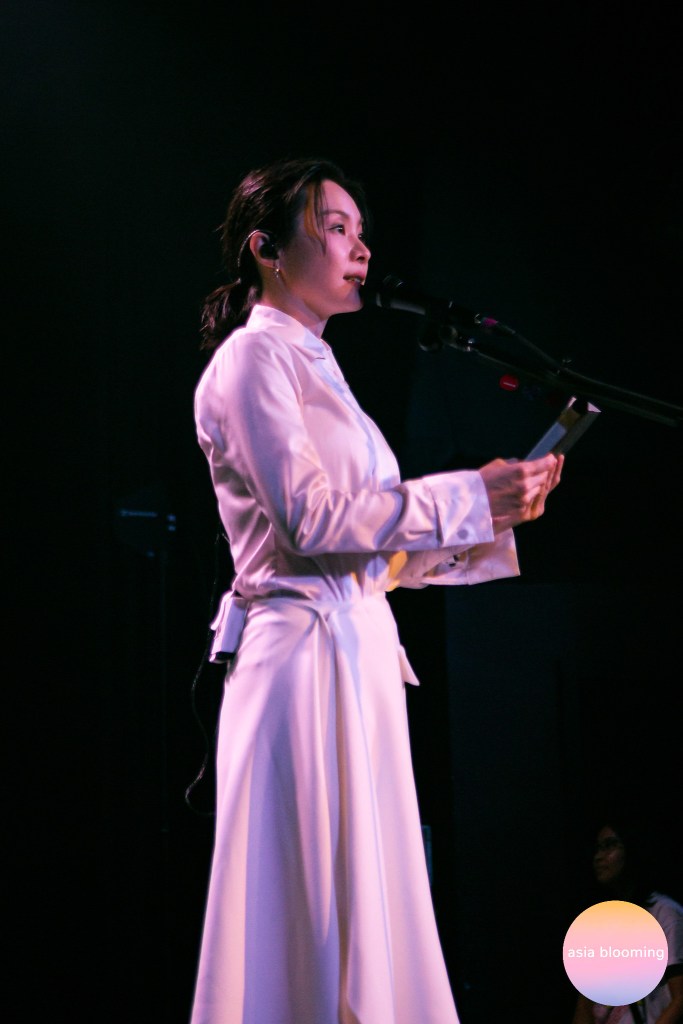
She pulls out a book and reads a passage from The Land of Little Rain, a book of short stories by Taiwanese author Wu Ming-Yi. This story is about an autistic child who couldn’t talk much to people but loved learning about birds and listening to birdsongs. Unfortunately, one day he lost his hearing. While he was unable to listen to the birds anymore, he made another deaf friend and started using sign language to share what he learned about birds. The two found connection in an unlikely way, and the song “人如何學會語言 / How the brain got language” is a tender song based on this story. Its gentle yet lush piano-forward accompaniment is interspersed with birdcall-like whistling.
One of my personal favorites is “牽我/Hold My Hand,” a heart-achingly beautiful love song that recognizes the magic of choosing each other in the small moments. She promises to “be your conscience / be your lighthouse / offer you the most stubborn companionship in the world / even though / I have mine, and you have your cold winter.” Love is not about saving each other; it’s about holding each other as we find our ways through our darkness, our “deep loneliness.” There’s a throughline of loneliness in many of her songs. “千千萬萬/Lightyears of Solitude,” despite its retro, upbeat quality, grasps at the vast infinitude of space and time. “Thousands of unspeakable words / Shine in the dark / Thousands of tears that no one can see.” In her other songs, interstellar synths and robotic vocal layering effects hint at the human search for meaning in an impersonal universe.
Her songs are a reminder that while loss and loneliness are facts of life, so are wonder, connection, and romance. Her parting words sum it up beautifully: “In times like this, we need something to believe. No matter what the world looks like, I believe we can find each other again through music. I will carry this wish until we meet again.”