

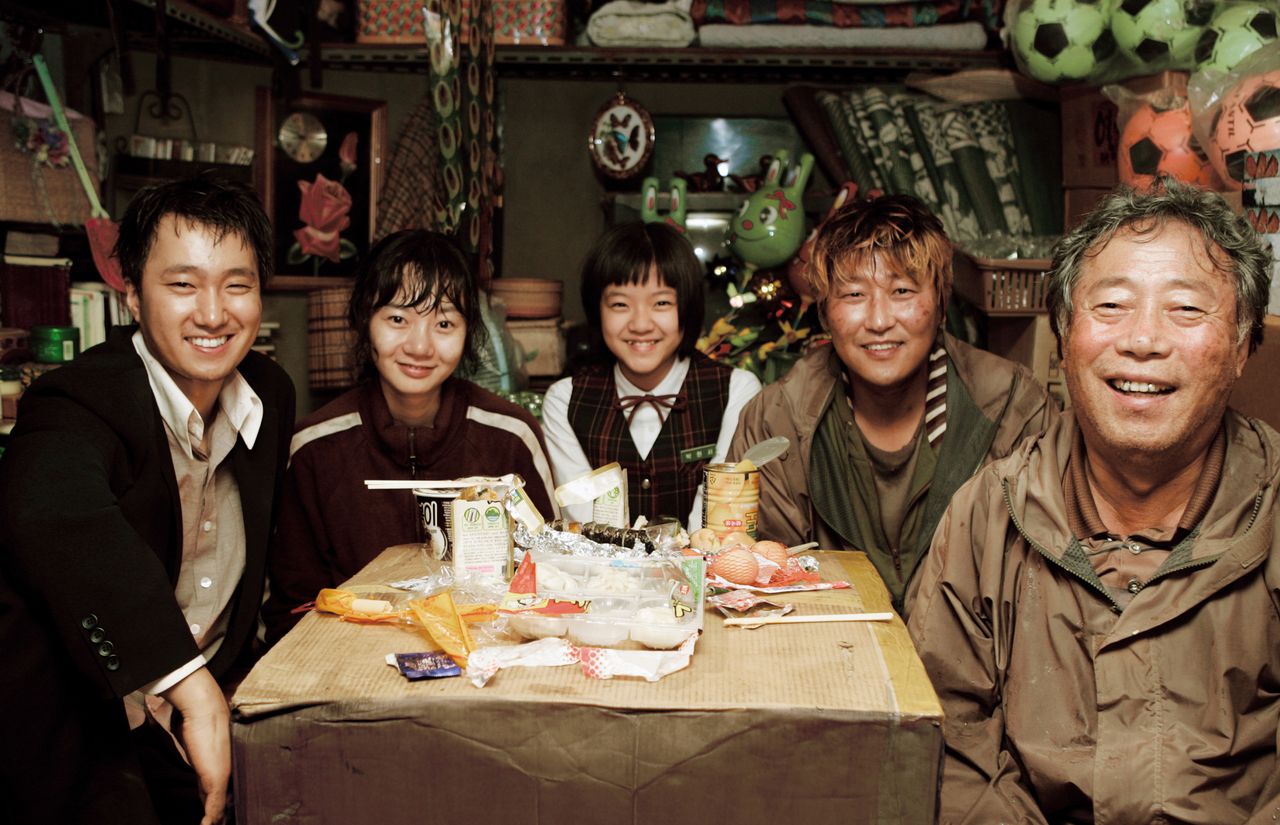
The Host made history upon its release in 2006, becoming the highest-grossing South Korean film at the time. It also earned widespread critical acclaim internationally and received numerous accolades, including the Asian Film Award for Best Film. Nearly two decades later, the film’s exploration of corruption and greed, and how it leads to disease for the working class, remains just as relevant to audiences today.
In celebration of the film’s 20-year anniversary, The Host will be revisiting theaters across the U.S. starting November 20. This theatrical re-release will feature a 4K restoration, allowing viewers to see the film with strikingly vivid colors and enhanced audio. Scenes showed more detail and color, with different hues and shades of lightness and dark. Most notably, the audio quality became incredibly immersive in a theater setting. The restored version brought greater clarity to the film’s sound design, from the people’s screams and monster’s stomps to the quieter moments that build tension before a violent scene. These improvements made the monster’s presence feel more real, drawing the audience further into the film.
The Host follows Gang-du (Song Kang-ho), who works at a food stall along the Han River. He’s a lazy, inattentive person, constantly sleeping on the job and missing school activities for his daughter Hyun-seo (Ko A-sung). As Gang-du heads to the riverbank with a delivery on another seemingly normal day, he notices a large crowd gathered, taking pictures and talking about something hanging from the Han River Bridge. That’s when he sees a terrifying creature climb onto the riverbank and begin crushing and devouring people.
Gang-du attempts to attack the monster and defend other civilians, but as reality begins to dawn on him, he and his daughter make a run for it. Unfortunately, the monster grabs Hyun-seo and disappears back into the water. The government claims the the monster is the host of an unknown virus, but audiences learn early on that its origins likely trace back to an American pathologist who ordered the illegal dumping of gallons of formaldehyde into the Han Riger. When Gang-du discovers that his daughter is still alive, the film shifts its focus to his desperate efforts to rescue her.
With the 4K restoration and re-release, Academy Award-winning director Bong Joon Ho also shared some thoughts as he walked down memory lane in a recorded conversation with fellow director Edgar Wright.
When the film first came out, director Bong emphasized how important it was to him to have an ordinary family at the center. He described them as leading repetitive lives confined to their small food stand by the Han River, and then robbed of their peaceful daily routines by the monster. At the time, he wanted the film to show how these exceedingly normal people, no different from our everyday neighbors, can transform into monster-fighting warriors. “I was a very big fan of Spielberg’s works, as he’s a master of his work, especially in the 1970s with Jaws and Close Encounters of the Third Kind,” director Bong began. “But, the most influential film for me when creating The Host was M. Night Shyamalan’s Signs. Rather than following the government or scientists or military personnel, that film followed an ordinary family, and that’s what I wanted to do with my film, too.”
One of director Bong’s most important objectives was to show that the creature was not the only monster in the film. Ultimately, The Host tells the story of an ordinary family’s fight for survival, not against the physical monster but also against a society that is indifferent to their suffering. “The government not only doesn’t help the family, but they actually become an obstacle bigger than the monster itself,” Bong described. “It makes you wonder why the humans are not helping, and how much harm comes to be because of human greed rather than these material monsters.”
Another big decision he had made when making this film was choosing to have the film and monster live in the Han River. For Seoulites, it’s a very common and familiar space, so to have somewhere they see everyday become the center of this disaster could be felt personally. Like many of director Bong’s films, The Host uses visual contrasts to highlight the differences in class and social privilege. “I always try to be physical when I’m making a movie, and Parasite and The Host were quite similar in that sense,” he shared. “It’s a very vertical movie. From the top of the hill to the very deep basement, and there is a monster in the basement. These are stories where the whole community, society, and all the people had some kind of responsibility to the birth of that monster.”
The stars of The Host are award-winning actors now, but back then, many of them were just getting their start. This film was one of many that director Bong worked on with actor Song Kang-ho and Bae Doona, but the most striking growth comes from Ko A-sung, who played Song’s daughter in the film, Hyun-seo. Even back in 2006, director Bong had nothing but praise for the young actress making her debut. “Ko is young, to be sure, but I wouldn’t call her a child actress. She is an ‘actress,’ period,” he has said in one interview. Now, she stars as the lead actress in a variety of dramas.
Aside from the actors, one clear star of the film is the monster itself. In 2006, VFX was not nearly as advanced as it is now in 2026, but Bong was also not as prolific of a director as he is now. “I made that film when I was only 36, and now I’m 56,” he said with a laugh. “We’re getting old now.” With limited VFX abilities and tighter budgets to work with, one of the most memorable experiences he had from making this film was creating the monster. “Just like with Spielberg’s Jaws, we had to limit the amount of time we showed the monster onscreen because we only had the budget for a certain amount of VFX,” he began. “115 is a number I will never forget. We could only show the monster 115 times in the movie, so we had to show its impact with the actors’ dialoguesand reactions instead.” Thinking back, however, he believes the impact of the film is what it is because it was released as it is. Even if he had the opportunity to add more scenes with the monster, he would keep the film the way it is.
Revisiting the film brought a sense of nostalgia, wonder, and humble pride for Director Bong. Seeing The Host return to theaters after two decades offered an opportunity to reflect on the journey that followed, from the success of Parasite to his numerous accolades and place in global cinematic history.
The 4K restoration of THE HOST can be seen in theaters across the U.S. starting November 20.
