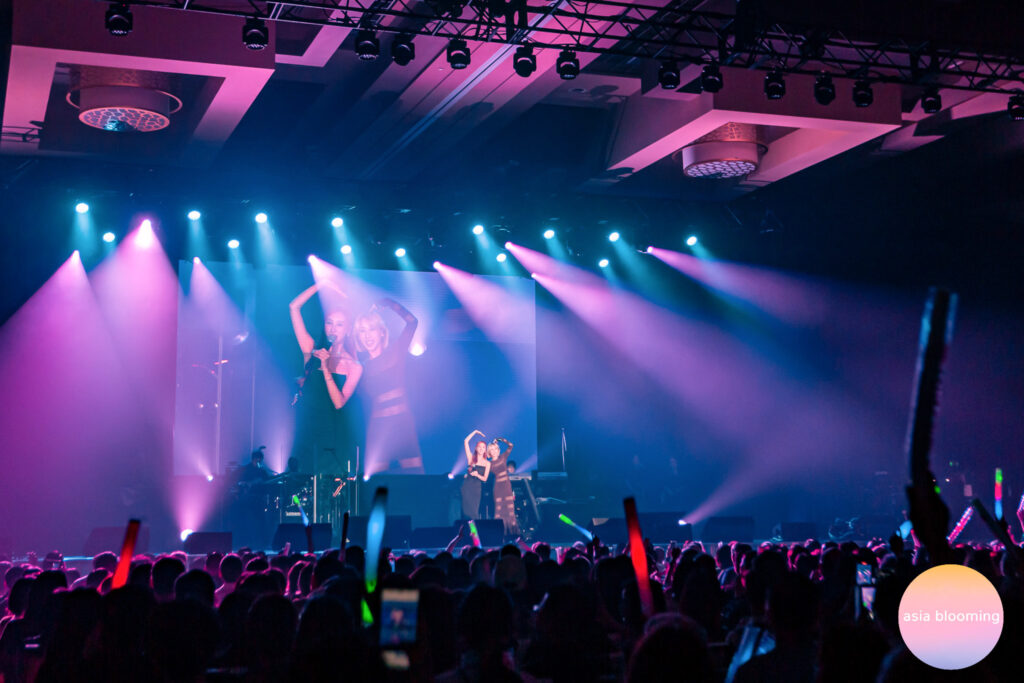
On October 21st, thousands of concertgoers of all ages, from young children to middle-aged parents to seniors in wheelchairs, streamed into Pechanga Summit, while clutching foam lightsticks in eager anticipation for the “HER” performance featuring Cantopop veteran Priscilla Chan and rising stars Vincy Chan and Angela Hui.
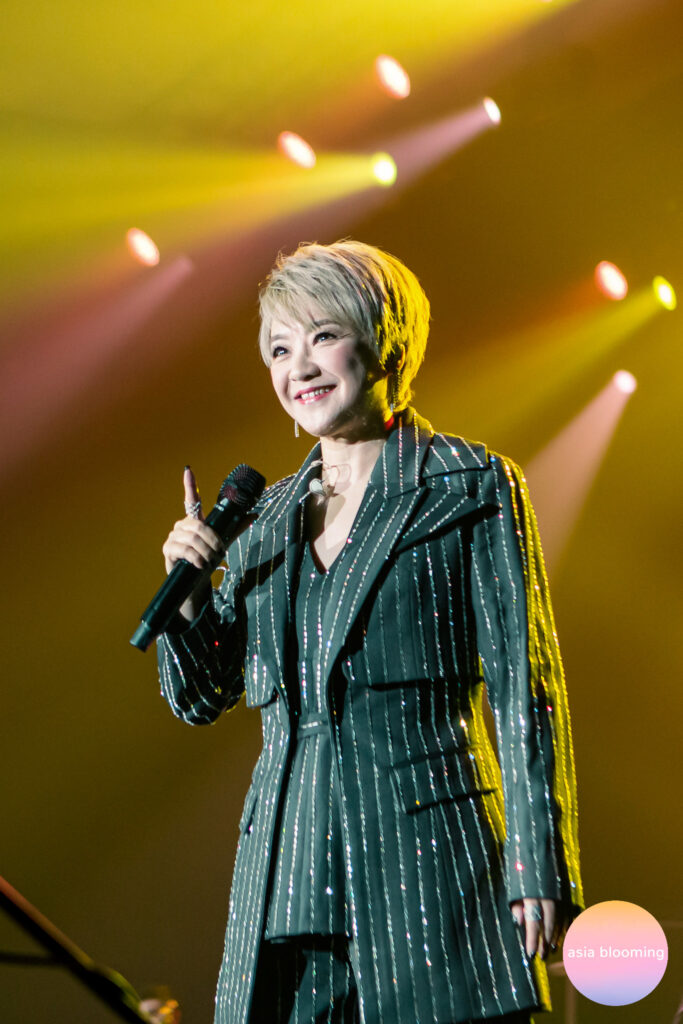
While those from the older generation saw firsthand Priscilla Chan’s meteoric rise to fame in the 1980s, many of the children in attendance likely also grew up listening to Chan’s songs and other Cantopop oldies that their parents would play. Chan’s stardom was cemented with widely loved songs like “Forgotten Promise (逝去的諾言),” “Silly Girl (傻女),” “Dancing Street (跳舞街),” and her most popular song, “Thousands of Songs (千千闕歌).” In the 1980s and 1990s, which many consider to be the “Golden Age of Cantopop,” she was one of the Cantopop legends alongside vocal powerhouses Anita Mui, Leslie Cheung, and the legendary band Beyond. At the peak of her singing career, she stepped away from being a full-time singer to pursue a college degree in the US, where she continued to release music. While she was able to retain much of her popularity when she returned to being a full-time singer in 1995, she saw less success starting in the 2000s when a new generation of Hong Kong singers and the Mandopop tidal wave captured the public’s attention.
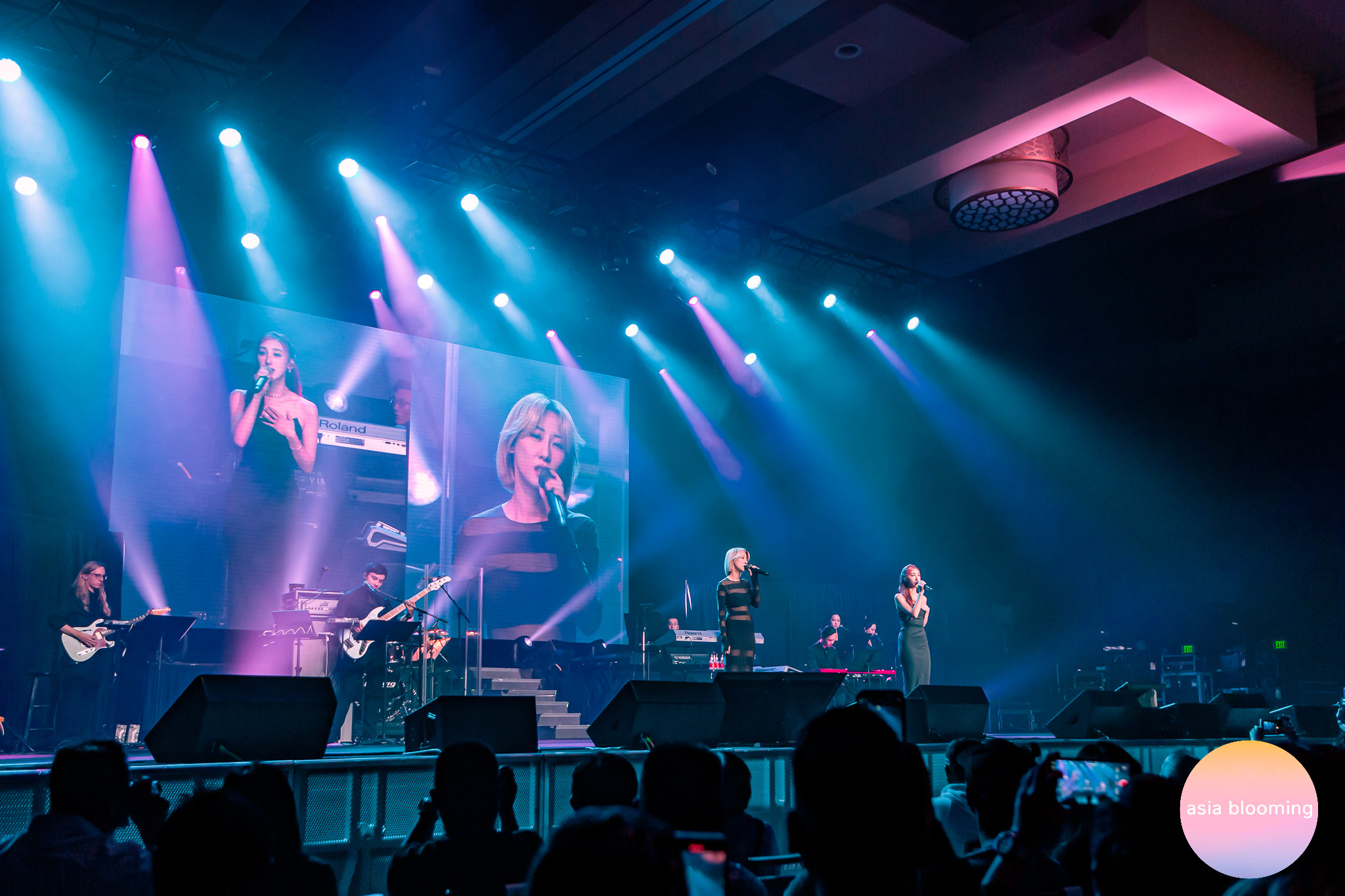
While Priscilla was the most well-known of the three singers that evening, the show was very much a collaborative effort designed to showcase all the performers equally. Priscilla’s songs had more of an “oldies” feel while Vincy and Angela brought a more modern, sentimental approach. Angela, who started her music career doing covers of Mandopop, Cantopop, and Western pop under the nickname “Little Vest,” also performed covers of American pop songs like Dua Lipa’s “Levitating” and Bruno Mars’ “When I Was Your Man.” Vincy and Angela’s sets alternated and intertwined in the first half of the show, even including a duet, “After Tomorrow (明天以後),” originally performed by Raymond Lam and Vincy Chan. Angela shared that she begged Vincy to include this song because she really enjoyed singing this at karaoke and that this was the first time it had been performed by two female singers. Meanwhile, Priscilla made a few cameos during the first half, performing several of her best-loved songs, in some cases as duets with Vincy and Angela.


Vincy performed some of her most well-known songs, including “My Memories are Not My Own (我的回憶不是我的),” as well as more recent releases like “Sea of Thorns (荊棘海).” Her delicate vocal style worked the best in “Glacier (葉落冰川),” where she delivered a satisfyingly full and supported chorus, buoyed by the soaring, cinematic strings. However, “Sea of Thorns (荊棘海)” required a bit more ferocity and angst than she could deliver in her upper range.
Angela’s setlist included several covers, including Eason Chan’s “K歌之王 (King of Karaoke)” and Eric Chou’s “What’s Wrong (怎麼了),” and also originals such as “Thank You, Sorry ( 謝謝對不起).” She has a smooth, controlled tone and a lovely middle range, though she lacks the nuanced musicality and emotional depth of a more mature singer like Priscilla.
Priscilla’s singing, while still powerful and well-phrased, is no longer at the same level as when she was in her early career. The brilliant femininity of her younger voice that soared effortlessly was now a more muted, mature tone, not quite as resonant. In “It’s A Small World (人生何處不相逢),” Priscilla let the audience sing the chorus, and they do so beautifully, a testament to the timelessness of the melody and its multigenerational appeal. In this song, the clarity and radiance that characterized her voice in her younger days peeks through in some of the higher notes. Similarly, some of the high notes in “Drifting Snow (飄雪)” retain their brilliant quality, whereas others fall a bit flat. Her debut song, “Forgotten Promise (逝去的諾言),” featured traditional Chinese instrumentation and remained well-received, as the audience passionately sang along during the chorus.
“Dancing Street (跳舞街),” which was performed as a duet by Priscilla and Angela, showcased the distinctions between the two singer’s vocal timbres. Despite being younger, Angela had a rounder, sultrier tone, while Priscilla’s felt more playful and girlish in comparison. Technically, both vocalists got their big break covering music by other artists. Many of Priscilla’s earlier songs were adaptations of songs from other languages; “Thousands of Songs (千千闕歌)” was a remake of Japanese singer Kondo Masahiko’s “Song of the Sunset,” the velvety “Night Flight (夜機)” was a cover of “So Viele Lieder Sind In Mir (So Many Songs in My Heart)” initially performed by 1982 Eurovision winner Nicole Seibert, and “Drifting Snow”(飄雪) was an adaptation of Yuko Hara’s 1991 hit “The Journey of the Flowers.” This ongoing trend speaks to the global influence on Cantopop and the international nature of Hong Kong, which in many ways fuses Western and Eastern cultures and attitudes.
Amidst wholehearted cheers, Priscilla returned for an encore and joked that she couldn’t leave without singing one last song, “Thousands of Songs (千千闕歌).” The crowd sprung to their feet, and many pulled out their phones to record this iconic song, which was a farewell song released right before Priscilla left the Hong Kong music scene in 1989. The lyrics are poignant and sorrowful, but during this concert, the song felt like a celebratory credits roll for not only a nostalgic evening, but for Pricilla’s illustrious career. While Cantopop may not be as eye-catching as K-pop or C-pop nowadays, the solid turnout for this evening’s show was a reminder of the genre’s enduring legacy and timeless tunes.
Click on the photo below to view our photos from the show: