

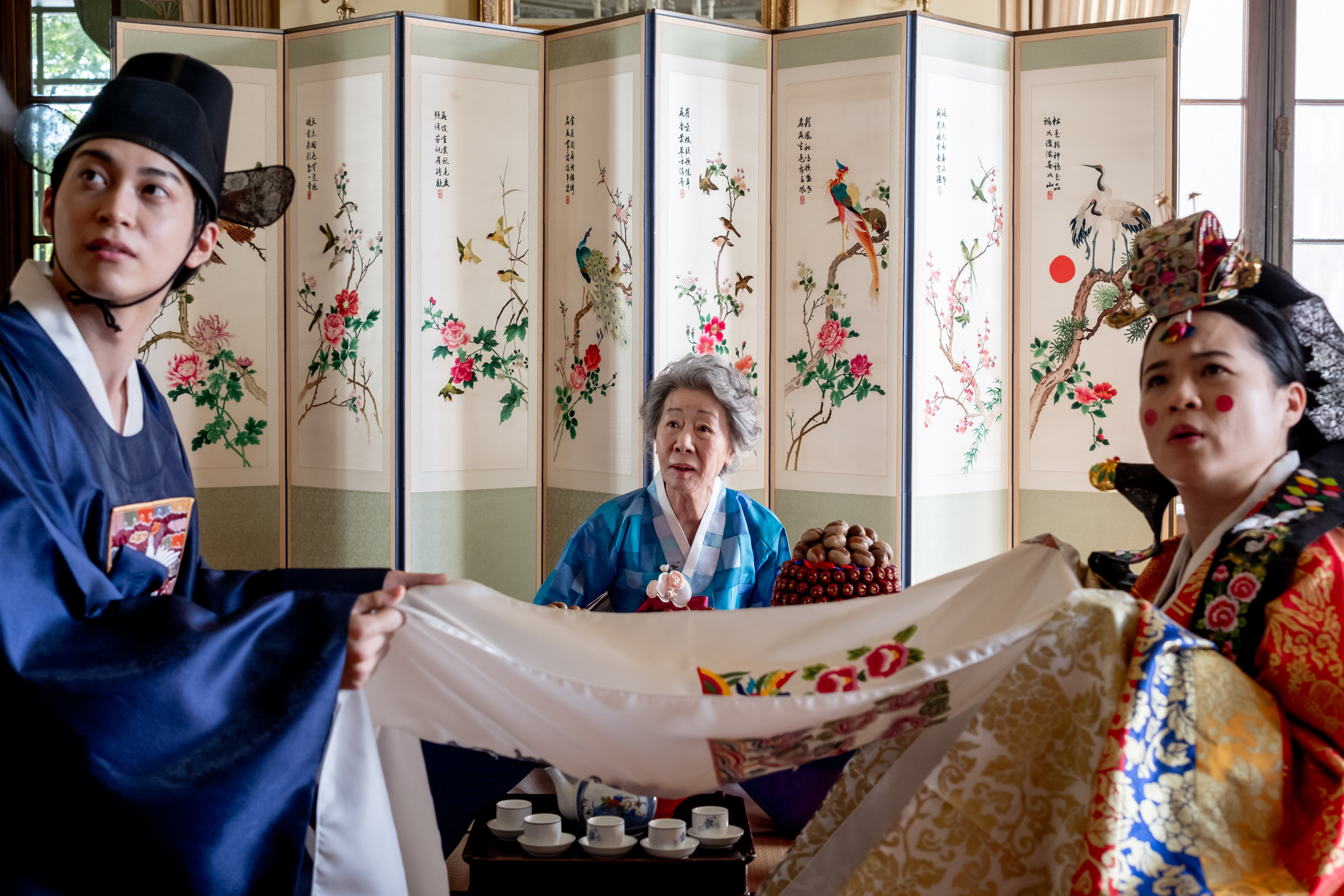
In Andrew Ahn’s The Wedding Banquet, Min, a gay man in need of a green card, and Angela, a lesbian woman in need of money for IVF treatment, come up with an unusual solution to solve their problems: a sham marriage. The situation gets even more complicated when the man’s grandmother comes to visit with plans for a grand wedding. The film stars Kelly Marie Tran, Bowen Yang, Lily Gladstone, Han Gi-Chan, Yoon Yuh-jung and Joan Chen.
While the film is a remake of Ang Lee’s The Wedding Banquet (1993), it diverges from the original while preserving its heart: exploring queer relationships and family dynamics, both biological and found. A thread between both The Wedding Banquet films is James Schamus, who participated as a writer. “Having James there, who was a close collaborator with Ang Lee, it felt kind of like a blessing to have him be so present with the film,” said Yang.
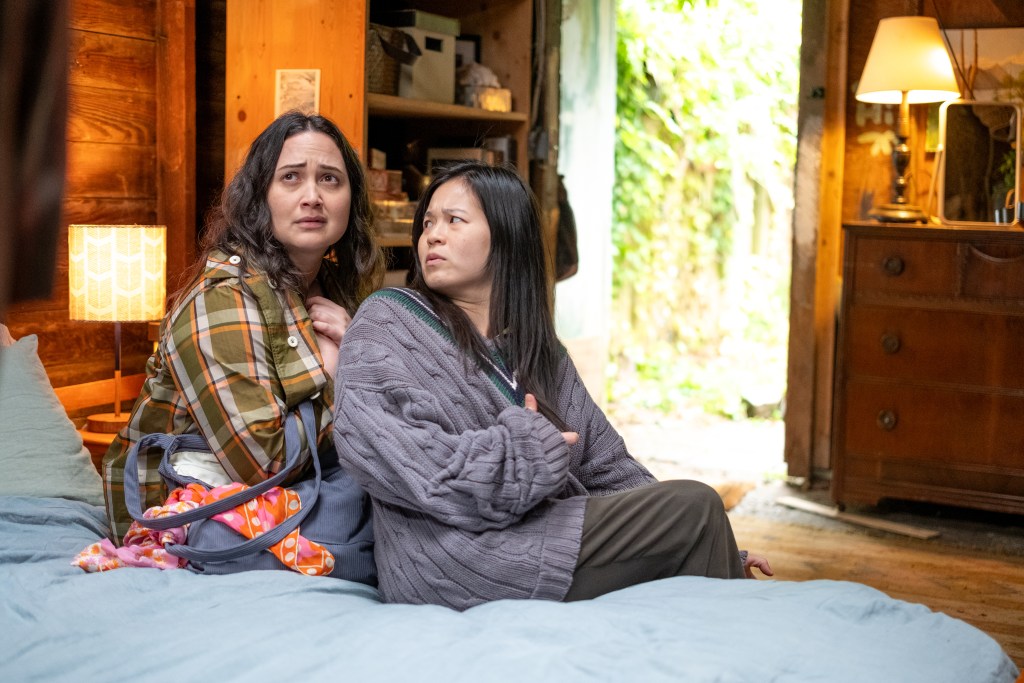
The cast put themselves into this film, finding room to bring in their own personal experiences to their characters. “I think whenever you’re given the privilege of playing a part where you can use your own personal experience and meld these two beings together, yourself and your character, it’s almost like you don’t even know the difference,” shared Tran. While filming The Wedding Banquet, Tran unexpectedly yet willingly came out as queer to the public. During a behind the scenes Vanity Fair interview, she couldn’t help but express her excitement to tell a queer story as a queer person. Sharing that it was so meaningful to make a movie honoring this part of her identity, Tran continued, “I’m so grateful that I have this community around me and that this film celebrates the community that I’m so happy to be a part of.”
Similarly, Gladstone expressed in bringing her own heritage to her character: “I was really happy having the opportunity to indigenize my character, who was not written with any ethnic specificity or cultural background in mind.” Given the film was shot in Seattle, Gladstone decided to make her character Duwamish. She explained that the concept of chosen family is common in Indian Country, and queer people have taken on the revered role of caring for children who are orphaned. Sharing that “a lot of modern urban Indians work in these progressive organizations,” Gladstone leveraged these pieces of her culture to shape her character, Lee, who is a LGBTQ+ community organizer.

The film examines some of the different experiences queer people face about coming out, particularly in conservative Asian families. “Min feels like he can’t come out to his family because it would cut him off from something that he feels rooted to. Angela had a pretty tumultuous coming out that ended up boomeranging back into overcorrected acceptance and therefore she feels alienated, even though it’s this thing that’s being embraced about her now,” started Yang. “As it relates to Asian culture, I feel like we’re still kind of collectively figuring out how to move into those spaces of acceptance that feel uncomplicated and don’t have an asterisk. It [this film] just feels very relatable.”
Navigating these complexities, Min, Angela, and their partners build a safe space with each other and form a new kind of family. “Min is still in the closet because of his family reputation and Korean traditional culture. That gives him all this pressure, which is why he feels so free when he’s with Chris and his friends. He really wants to be a family with all of these friends,” started Han. “I think finding your own family is very brave.” Continuing the conversation, Yang added, “The film converges these concepts too. It’s like this chosen family that lives together ends up becoming bound together by their children. And then between Angela and Min, they choose their biological family to bring them into the fold after years of being alienated.” Gladstone concluded, “It’s kind of a double meaning. There’s the family you choose, and then there’s the act of choosing your family.”
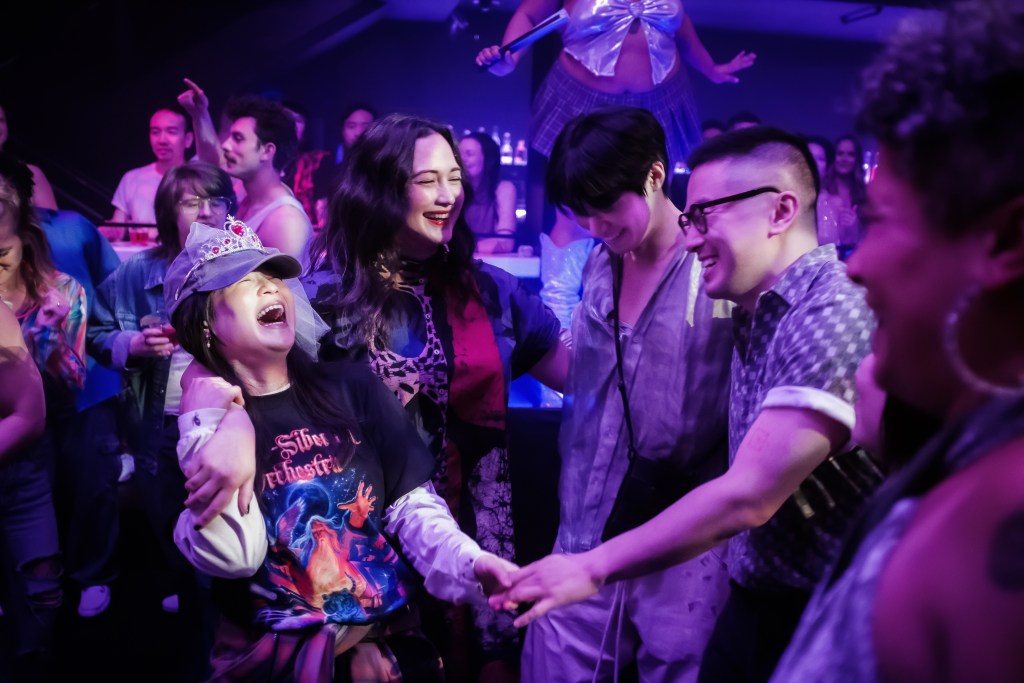
The Wedding Banquet’s April 18 premiere comes at a time when the US is seeing the most anti-LGBTQ+ bills filed in a year in national history. “We didn’t make a political film. We made a film that has a really solid bedrock with socioeconomic and cultural comments. I think it’s a film that represents people really authentically where they’re at,” shared Gladstone. “People [the cast and filmmakers] wanted it to feel like this home was a welcoming, warm, vibrant, loving environment that you want to live in, and one you want to see a child raised in. We didn’t know that we were making such good medicine for the times and for the people who need it.”
This iteration of The Wedding Banquet doesn’t end with the film. Gladstone revealed, “It’s being turned into a libretto, an opera for the Metropolitan Opera New York which will be premiering in the next few years.”