

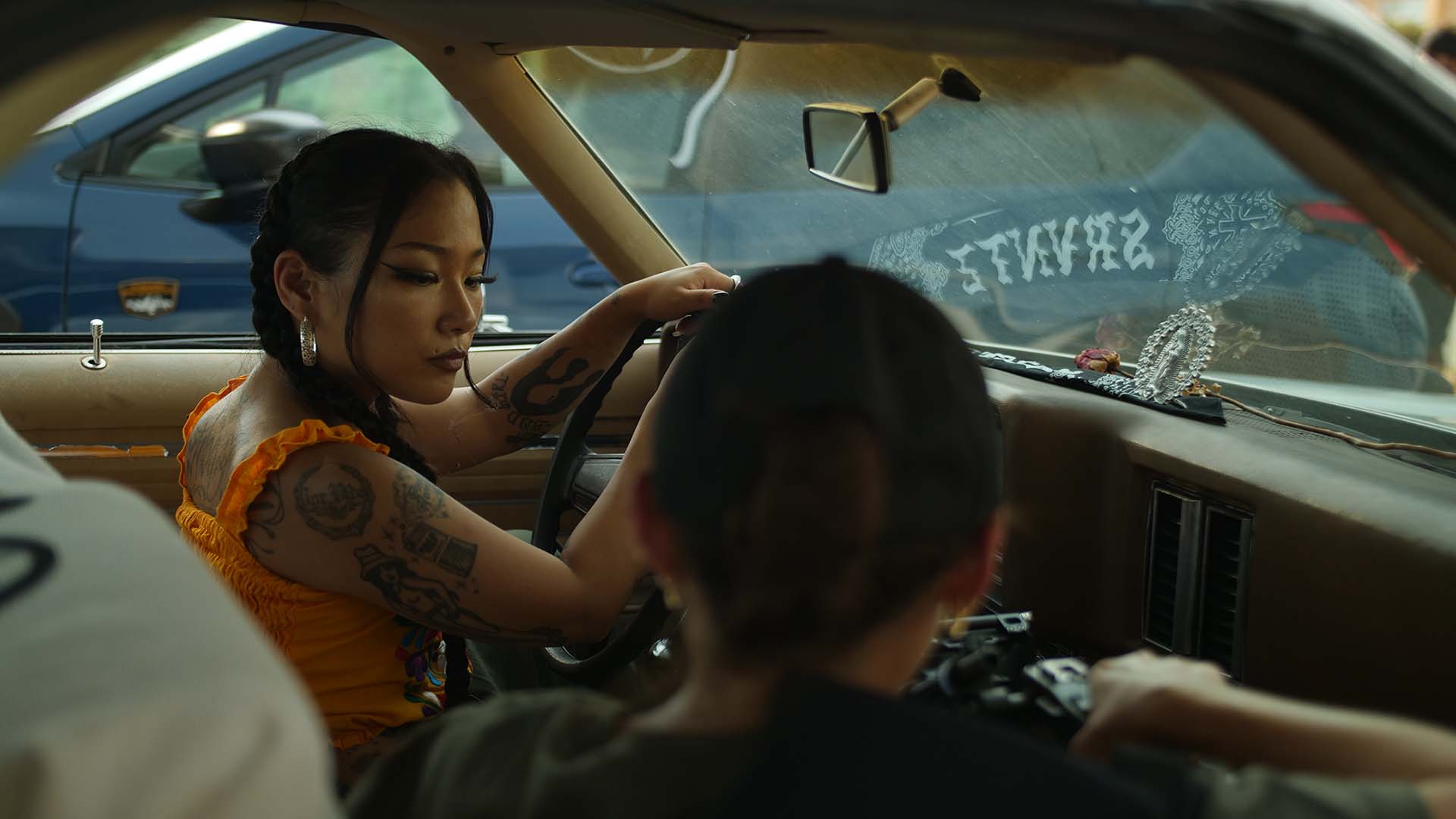
Far East LA is a four-episode project directed by Jun Shimizu and Rubén Guevara III and produced by Natsu Furuichi. This year’s Los Angeles Asian Pacific Film Festival (LAAPFF) features a world premiere of one of the episodes, “BARRIO BEATS x TAIKO STREETS.” Fueled by Guevara’s desire to use the medium of documentaries to tell new stories in the face of anti-immigrant rhetoric in the US, this 23-minute episode illuminates two LA-based artists and how they found their voice and their home across cultural divides. There’s MoNa a.k.a Sad Girl, a rapper and singer originally from Japan who found the familial closeness in LA’s Chicano community that she had craved growing up, and there’s Maceo Hernandez, an East LA native who followed his passion for taiko drumming to Japan and eventually back to his hometown.
The film does a nice job of showing the parallels between the two artists–the way they were captivated by their interest at a young age, how they encountered difficulties that questioned their relationship with their passion, and how they came out of those challenges by creating something uniquely their own. I appreciated that the film holds space for the artists to tap into the emotional and challenging aspects of their journey. Mona wipes away tears as she recalls her anger and sadness when she was accused of cultural appropriation. “I’m just doing what I love,” she says through a teary smile. The film acknowledges that there is a fine line between stealing and appreciation, and it positions both artists firmly on the appreciation side of the line, underscoring the deep love and understanding that they both cultivated. Maceo’s major challenge was a life-changing accident that led to the loss of one of his legs. Instead of giving up on taiko because of its intense physical demands, he worked to build up his strength and even completed a marathon in a prosthetic. He then went on to found East LA Taiko, an ensemble that blends Afro-Cuban and Caribbean rhythms and taiko into a distinct sound.
In addition to interviews with the artists, there were also interviews with other community members to provide context for the artists’ journeys. I would have liked a bit more background on how the other interviewees were connected to the artist. The film didn’t share that professor and playwright Oliver Mayer worked with Maceo to co-write music for a play, and it also didn’t share how Johnny Mori, a fellow taiko player, met Maceo. Aside from that, the film covers a lot of ground in under 22 minutes and keeps its focus on the parallel stories of the two main artists.
Through uplifting music and a montage of interviews, the film celebrates the concept of cross-cultural pollination and compares the LA creative landscape to a “mosaic,” a place where people of various cultures can come together to create something new and beautiful. It’s an inspiring reminder of the power and possibility that arises from collaborating across cultural divides, and that there is so much more depth and nuance to every person’s cultural experience that cannot be assumed based on what they look like.
