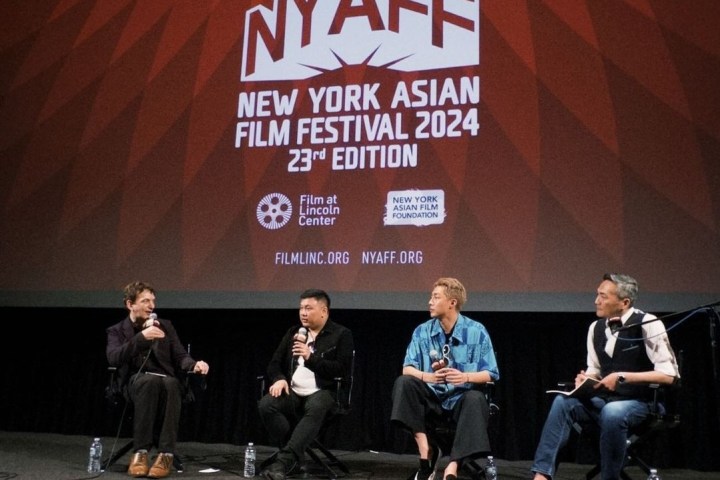
Streaming on Netflix, the Japanese action series House of Ninjas is the newest addition to the ninja genre. The series follows Haru Tawara and his family of former shinobi, who are called to come out of retirement to fight against a rival clan that threatens Japan. Asia Blooming sat down with director Dave Boyle to discuss how he aimed to revitalize the ninja genre with House of Ninjas.
Created by co-executive producer and lead actor Kento Kaku, Yoshiaki Murao and Takafumi Imai, the story was built upon the idea of a fractured ninja (shinobi) family in modern day Japan. When Netflix approached director Dave Boyle with the series, he was immediately drawn to the opportunity to work on an all-original big-scale action show: “It’s so hard to come across opportunities like this; it’s like a golden ticket.” In order to further flesh out the world of the show, Boyle took a deep dive into shinobi history. “There was so much stuff about being a ninja that I didn’t know, like all the rules and restrictions around drinking, diet, and dating,” he started. “I loved reading about all the real life ninja clans and their peculiar practices, like how the leader from the Fuma clan was always named Fuma Kotaro so that it looks like they have an unbroken line of succession throughout history.” To Boyle, it was important to maintain a sense of tradition that lived on even through modern time in the show.
While the Tawara family abandons the shinobi life and attempts to live as ordinary citizens, their innate instincts and skills would reveal themselves despite efforts to conceal them. “I wanted to create a world that viewers can slowly sink into more and more until things get really crazy,“ said Boyle. “On the surface, it starts off as everyday life. The opening scene of the show is just this guy reloading vending machines, driving around with his buddy, and eating beef bowls. It’s just everyday life, but bubbling underneath the surface is an ancient war between ninja clans that none of us notices. That really excites me as a storyteller.”
Each member of the Tawara family has a different relationship with their shinobi heritage. “I wanted to explore the difference between yearning for freedom and yearning for some sort of structure or belief system,” he said. “There are characters like the mother, Yoko, who misses the thrill of the mission and the sister, Nagi, who takes pride in her identity as a shinobi. Meanwhile, there’s the father, Souichi, who wants to leave the shinobi life behind due to the disappointment and bitterness of how their last mission went. For Haru, he occupies his own space where he yearns for freedom, but the circumstances and his sense of responsibility keeps pulling him back in.”
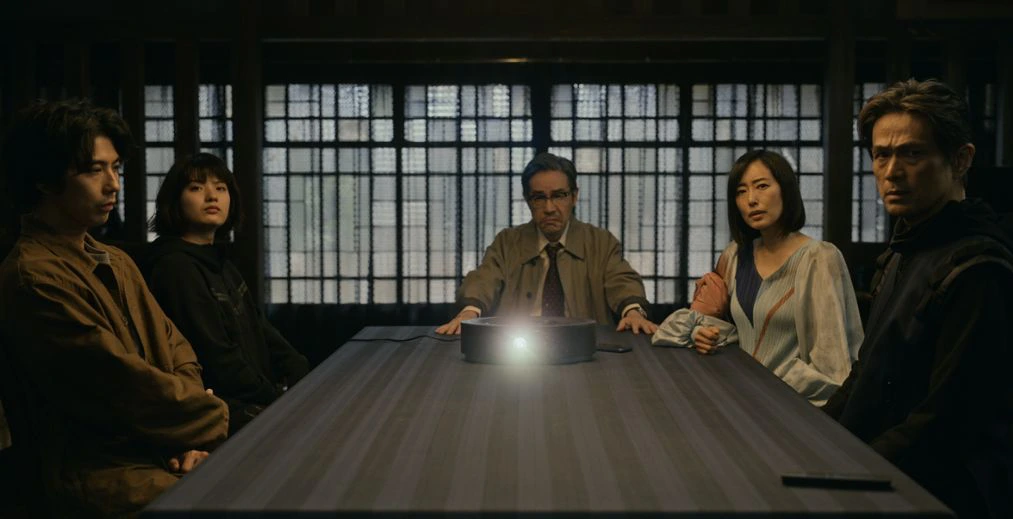
The star-studded cast that makes up the Tawara family includes veteran actress Nobuko Miyamoto, renowned for her roles in classics including, Tampopo and A Taxing Woman. “It was like a crazy out-of-body experience to work with Miyamoto. Her films have played a huge role in both my Japanese film and language education,” Boyle shared. “The first day of rehearsal, she came in and went straight to Tenta Banka, who plays the youngest grandson Riku, and said that they’ll be working together so they’ve got to work hard. It was just so cute. She treated him as her teammate and as her equal, which was so wonderful.”
Bringing the cast together to create the complex family dynamic turned out to be natural thanks in part to the design of the huge Tawara home, built on a set: “It became everybody’s home. When the cast was waiting for the next take, they would just sit in the living room, chill out, and talk with each other. It helped create a warm family dynamic on set, which was really lovely.”
、Netflixシリーズ世界独占配信。-1024x682.jpg)
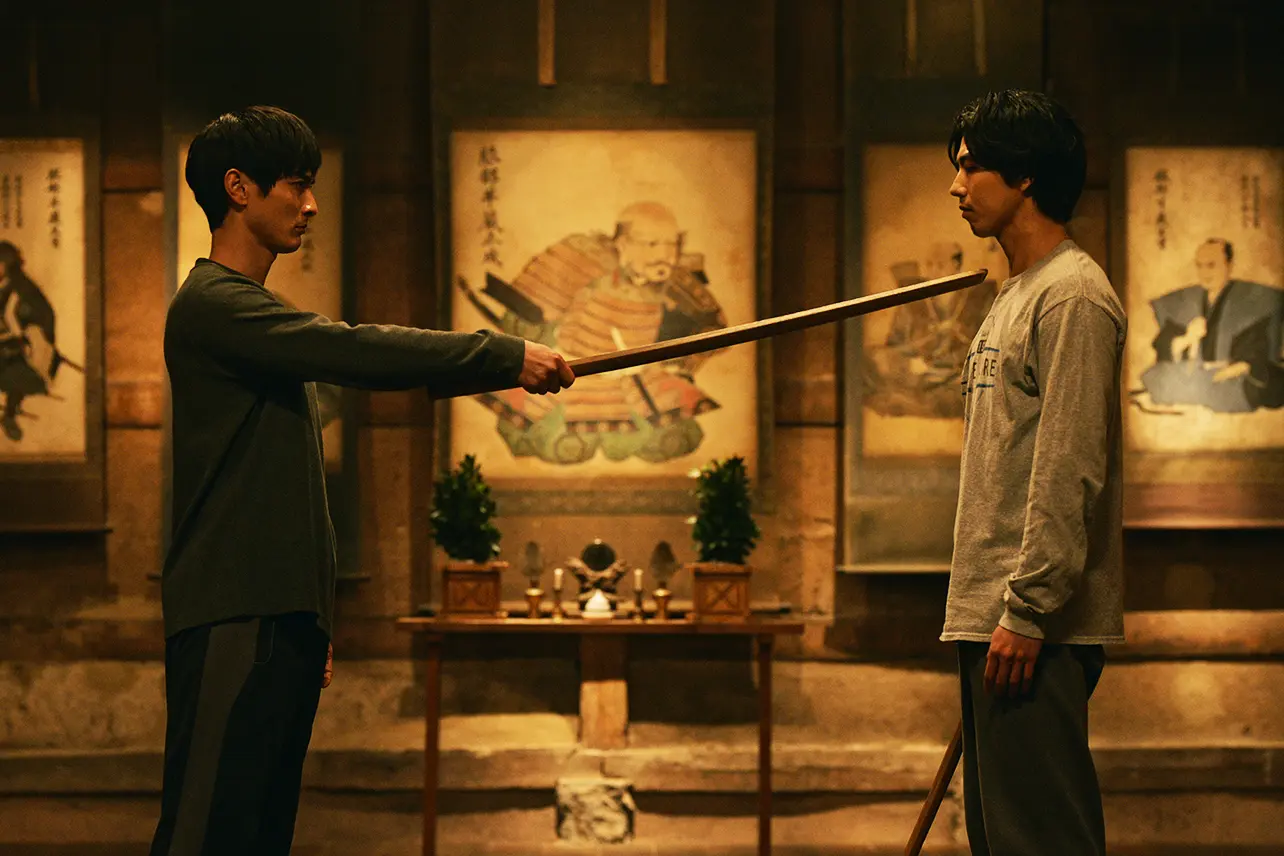
To get the cast ready for combat, Keiya Taguchi, who is known for his work on Shin Kamen Rider, was brought in to lead the action team as action choreographer. “He got involved early on so that we could talk through the script, get his feedback, and create opportunities to express the characters through action,” he started. “For Yoko, there was a more playful fight style, in which she’d steal belts right off of people. As for Soichi, he’s just chopping his opponents down; he’s almost more like a samurai in that way. When Haru fights, it’s very quick and stealthy. Each of these styles took a lot of planning.”
There was also a conscious decision to include a variety of fight scenes from discreet to explosive to showcase how shinobi adopt their combat styles to their surroundings. During a “shinobi rumble,” as Boyle put it, the clans can engage in a full blown battle with no holds barred, but when in public, the shinobi take on a more tactful, yet no less intense, approach. He shared, “There’s the scene in the club, where two guy are fighting, and none of the customers around them are noticing. It was all about finding ways to choreograph close quarters fighting, where they’re basically inches away from each other, while still landing heavy blows. And also choreographing it in a way that we can shoot it and have the audience see exactly what’s going on despite the dark outfits and setting; it was a challenge.”
While a season 2 is not yet confirmed, Boyle has “lots of plans” to show the Tawara family casually flexing their shinobi skills in everyday life should another season be greenlit. Due to constraints, not all of Boyle’s ideas could make it into season 1. “One thing I wish we had been able to do is more stuff at the sake brewery,” revealed Boyle. With an open-ended season finale, there is certainly more that could be explored in the hidden world of House of Ninjas.