Warning: This review contains film spoilers. Also, the film features the topic of sexual abuse of a minor. If you or someone you know needs support, you can reach the National Sexual Assault Hotline 24 hours a day at 1-800-656-4673.
Carl Joseph E. Papa’s latest animated film, The Missing (Iti Mapukpukaw), explores grief, trauma, and the path to move forward and accept the past. The film tells the story of Eric (Carlo Aquino), a young Filipino animator who unknowingly dives into his own repressed tragic memories. One day his mother Rosalinda (Dolly de Leon) asks him to look for his Uncle Rogelio. Despite having no recollection of this uncle, Eric, who is mute and does not have a mouth, promises to help after a long day at work. Eric’s work crush, Carlo (Gio Gahal), offers to drive and accompany him to Uncle Rogelio’s home, only for the two to find the uncle’s rotting, decaying body. This sets off a trigger in Eric’s mind, and he spends the next several days in a haze between fantasy and reality as he believes he is being hunted by an alien from his childhood.

Although Carlo and Rosalinda are concerned, Eric tries to continue his days as usual. It works for the most part, except there are moments when he sees the aliens. Each time he’s faced with the aliens, however, he remembers forgotten memories starring himself as a child and an adult man with his face blurred out. These memories are filled with phrases of praise for Eric being a good child, for growing up well, and for him to remember that “these occurrences” are happening because Eric is becoming a man, so he should keep them a secret between Eric and the adult man. Alluding to previous years of abuse, it becomes clear as each of these memories appears, that the alien abductions were the result of a child’s coping mechanism and that the adult man was sexually abusing a young Eric. Unfortunately yet unsurprisingly, the adult man in question was none other than Uncle Rogelio, explaining why these thoughts were resurfacing after his death. The film details Eric’s journey of finding out what happened in the past, coming to terms with the trauma, and learning to move past it with the comfort and support of Rosalinda and Carlo. By the end, the young protagonist finds liberation, freeing himself from the aliens that haunted him, and finding his own voice once again.
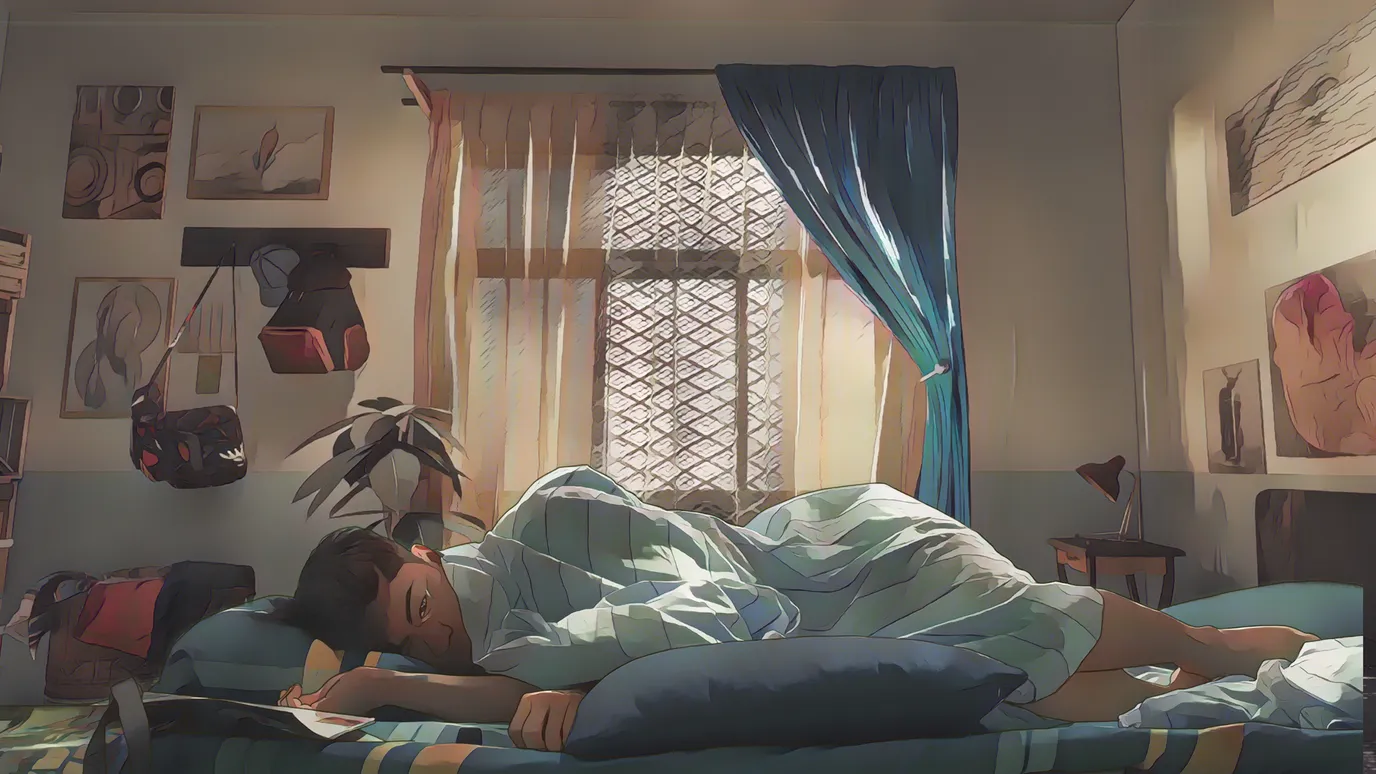
Director Papa deftly portrayed the depths of Eric’s abuse and ensuing trauma, while balancing it with effective visual storytelling that propelled Eric to freedom from his past. As a means to achieve this, a common theme within the movie was that “less is more.” Most of the movie is done in a rotoscope animation style, meaning the team of animators traced over motion picture footage, frame by frame, to produce realistic action. This art style often leaves out more details, and instead relies on the voice actors and their mannerisms to express their emotions. With simpler visuals, viewers are able to focus more on the story. Additionally, the casted veteran actors seamlessly portrayed their characters, even when words escaped them. Despite Carlo Aquino’s character being mute, he successfully played Eric as someone desperate to find answers and peace, utilizing his facial expressions. Notably, his emotions were often expressed with a scrunch or raise of his eyebrows, and a slight waver in his voice. The same could be said for the other two main characters, as Dolly de Leon portrayed a loving and concerned mother with her attentive attitude and soft gaze, and Gio Gahol played the somewhat shy yet committed boyfriend with his slightly hesitant movements and constantly worried demeanor.

Another important aspect of this movie was the unwavering support Eric had from beginning to end. Even while not understanding the insanity behind the alien abductions belief, Carlo and Rosalinda still supported Eric endlessly, fighting off guard robots together, attacking the aliens on their mothership, and hiding underneath the bed together for safety. The protagonist himself played the biggest role in finding out his truth himself, but, his strong support team also helped guide him gently to the end.
Along with the art style and top tier acting, The Missing also featured a lot of symbolism. As Eric began remembering more and more details of his childhood abuse, parts of his body begin to vanish. His mouth was already gone, but he soon loses his eye, his genitals, his ear, and his hand to the aliens. During a final confrontation with the aliens, Eric finally realizes the true meaning behind the aliens’ appearance, and he takes it upon himself to retrieve his full being by confronting Uncle Rogelio. Digging up his grave and opening the casket reveals his uncle’s face, and with that, the memories are fully retrieved from the haze, allowing Eric to take back his eye, his genitals, his ear, his hand, and even his mouth from his uncle’s casket. Speaking his first words since the abuse began, he turns to his mother and tells her that he has to tell her the truth about something, marking the end of his alien abduction horror story, and the beginning of his new life with his loving mother and boyfriend.
Even though Eric went through an unspeakable tragedy and has a lifetime’s worth of trauma to carry, The Missing focuses on his journey to finding the truth, and his future full of light as he steps forward with his scars. With loved ones by his side to support him through the darkness, Eric is able to reach the end of the tunnel and find the parts of himself that were missing.